Religious & Sacred · Explorers
Top 5 cave temples of Ipoh
By Aevum Editorial · Published · Updated
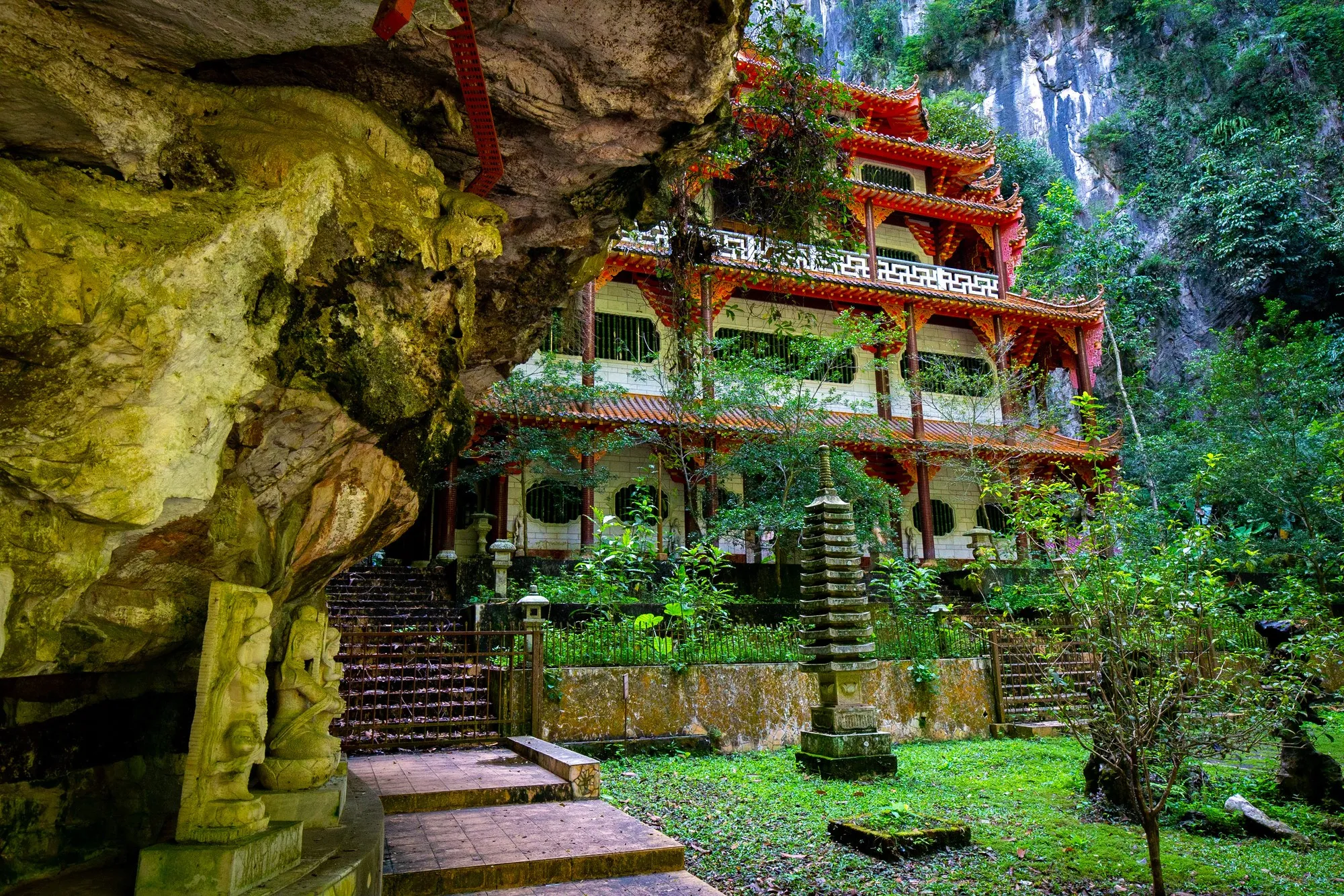
In short: Ipoh’s limestone hills hold dozens of Chinese cave temples, Buddhist and Taoist, some dating from before the Second World War. Five that are often visited, or well documented, are Sam Poh Tong, Perak Tong, Kek Lok Tong, Nam Thean Tong and Kwong Fook Ngam. They are listed in no ranked order. For each, we separate what researchers have documented from what the temple’s own tradition says. All are working places of worship.
Which cave temples can you visit in Ipoh?
The Kinta Valley’s limestone hills, part of a National Geopark, have sheltered shrines for well over a century.
Gunung Rapat, south of the city centre, holds a cluster that includes Sam Poh Tong, Nam Thean Tong and Kek Lok Tong. Perak Tong sits at the foot of Gunung Tasek, on Jalan Kuala Kangsar to the north.
How many are there?
It depends on who’s counting, and what counts.
Official tourism material mentions “nearly thirty”. From 2016, a university research team, funded by Perak’s non-Islamic affairs unit, surveyed the caves. Their first survey listed 42. A later study by the team traced 50: 39 cave temples, 10 temples beside a cave and one abandoned. The team’s 2017 book is described as covering 49.
For deeper study, the researchers picked seven temples with dated records, objects or official gazette records showing they existed before the Second World War. Two more were named later.
1. Sam Poh Tong
Sam Poh Tong, the “Cave of the Three Treasures”, is a Buddhist temple at Gunung Rapat, with Shakyamuni Buddha as its main deity. It’s one of the seven pre-war temples.
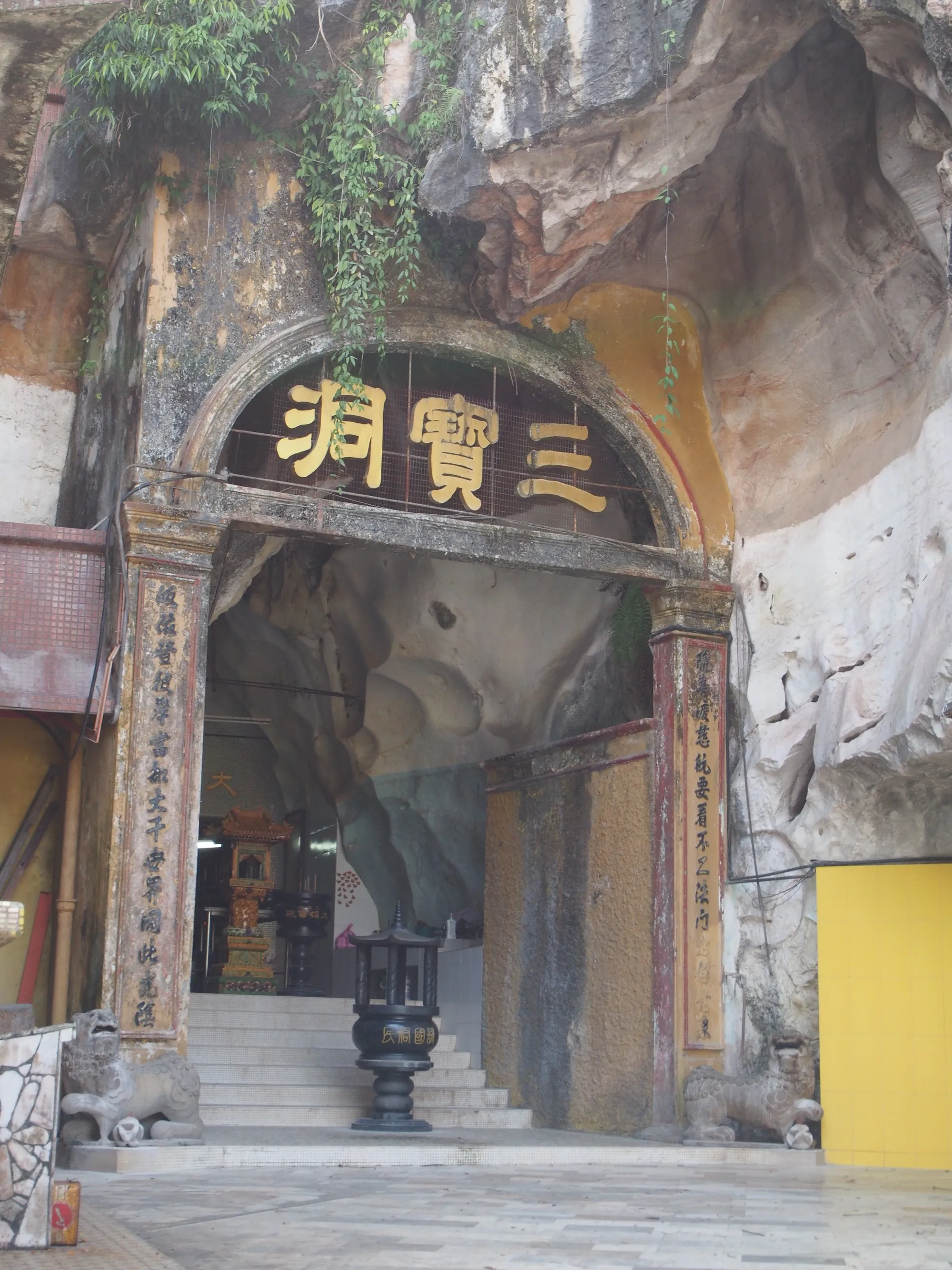
Researchers say monks of Kwong Fook Ngam’s lineage (below) founded it, a lineage traced to a monastery in Putian, Fujian. Its founder, Venerable Qingxin (清心法师), is described as a disciple of Kwong Fook Ngam’s Reverend Wei Jia. The temple is said to appear in the 1957 Hong Kong film 《椰林月》. Look for its tortoise pond and Goddess of Mercy pavilion.
One story goes that it began in 1890, when a monk came to meditate in the cave. No documentary source for that date has been found.
On 3 February 1974, it’s recorded, a dam at a tin mine across the road burst, sending mud over Sam Poh Tong and Nam Thean Tong. Five elderly residents of a nearby home died.
2. Perak Tong
Perak Tong, the Perak Cave Temple, is a Buddhist temple, also with Shakyamuni Buddha as its main deity. Unlike Sam Poh Tong, researchers say, it was founded by lay devotees rather than monks.
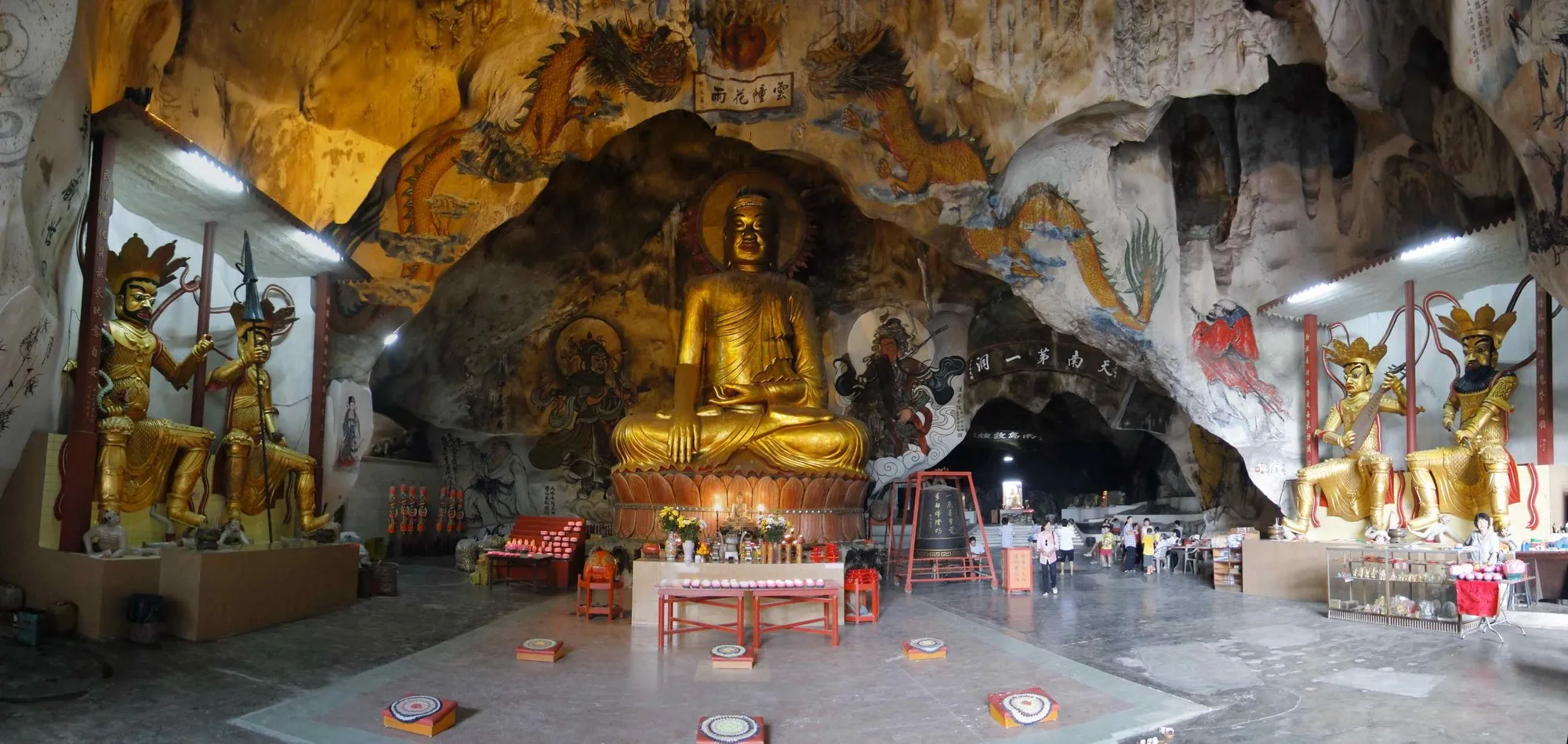
The plaque outside, as it’s been quoted, says Chong Sen Yee and his wife Choong Chan Yoke, from China, discovered the cave in 1926 and built the temple with state approval. Researchers note that the temple kept no relics from before the war; the earliest evidence of its pre-war existence is a 1941 painting by Zhong Bai Mu.
It’s said that the philosopher Hu Shi wrote its name, and that the painter Zhang Daqian left a mural. The poems written on its walls have been studied by researchers.
3. Kek Lok Tong
Kek Lok Tong (also spelled Kek Look Tong) lies at Gunung Rapat and is known for its gardens.
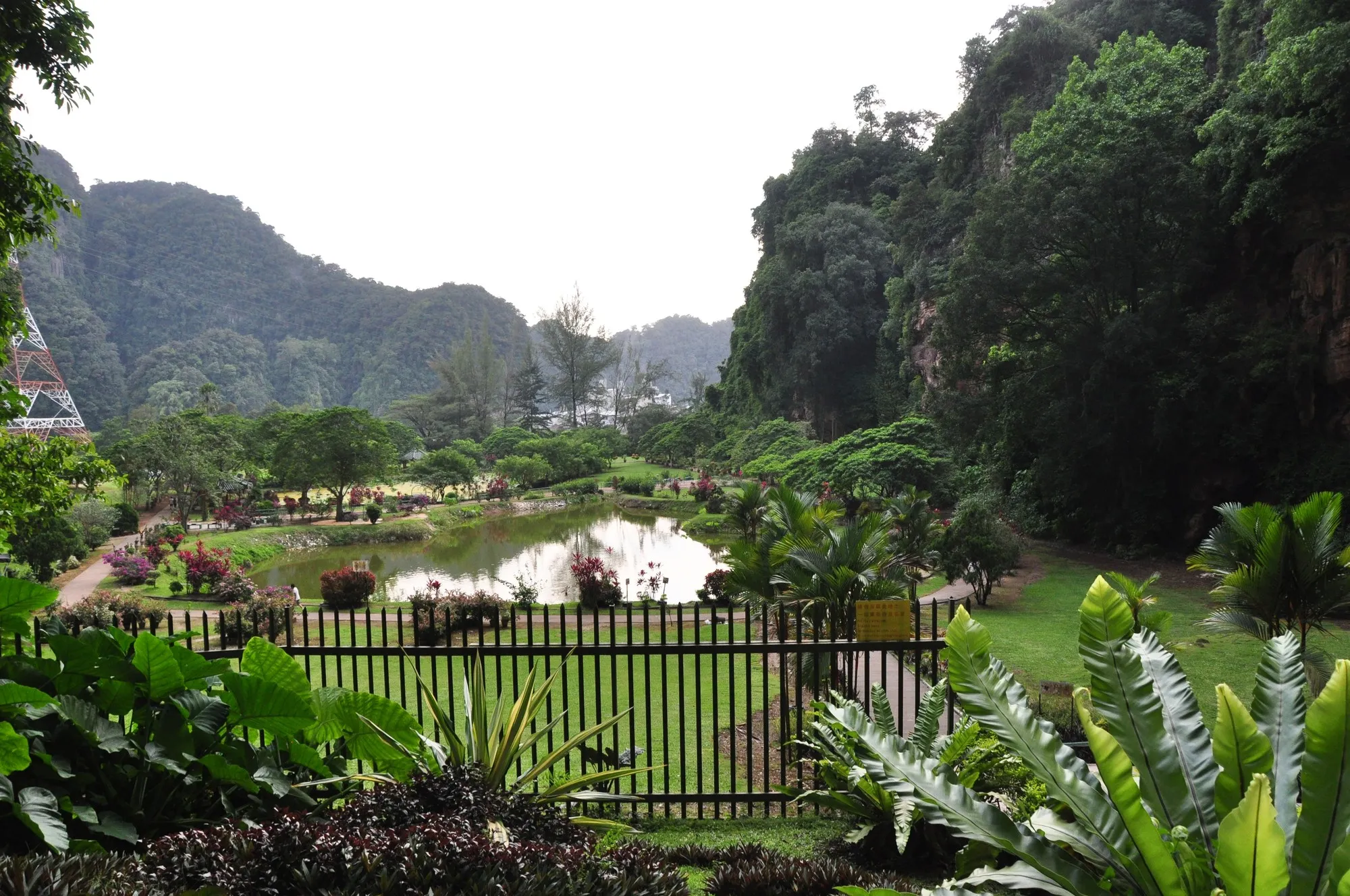
The temple’s own history says it was a place of worship by 1920, known as Tien Hou Gong. From 1960, it says, the cave was part of an iron mine run by Chooi Ah Kee. In 1982 his son handed it to the Kek Look Seah association, which renamed it. Researchers caution that, although popular, the temple lacks early records or objects, so its founding date is hard to confirm.
4. Nam Thean Tong
Nam Thean Tong, the “Cave of the Southern Heaven”, is a Taoist temple next to Sam Poh Tong. Its principal deity is Tai Shang Lao Jun, the Supreme Elderly Lord.
The temple’s own history dates it to 1867 and the Taoist priest Kuong San Teik (龚善德). More than 300 deity names are recorded in the temple, and the Taoist poems painted on one shrine wall have been studied. It’s said to preserve old wooden structures and the founder’s inscriptions.
5. Kwong Fook Ngam
Kwong Fook Ngam is a Buddhist cave temple in Kampung Kepayang. Researchers say it “may be the oldest” of Ipoh’s cave temples: a wooden tablet there records that it originated in 1890. Its monk Reverend Wei Jia links it to Sam Poh Tong.
Visiting respectfully
These are places of worship first. Read the signs at each entrance and follow guidance from temple staff. Dress modestly, keep your voice low near altars and people praying, and ask before photographing anyone.
In 2020, the state government was reported to be studying how to grant leases to cave temples, many of which have yet to be formally recognised.
What is still debated
- How many temples there are: nearly thirty, 42, 49 or 50, depending on who counts and what is counted.
- Which is oldest: Kwong Fook Ngam (1890, from a tablet) or Nam Thean Tong (1867, from the temple’s own history).
- When Perak Tong began: 1926 on its plaque, against no surviving pre-war relics.
- The mine disaster: usually dated 3 February 1974; one account gives 1973.
- What “gazetted” means: the seven studied temples are sometimes called “gazetted historical sites”, but the researchers say they were chosen for dated records, only some of which are official gazette entries.
Know a cave temple story we should tell? Write to us at [email protected]. If you look after a heritage venue, claiming a listing is coming soon: see aevum.my/businesses.
Report an error · Something wrong, incomplete or culturally insensitive? Tell us and we aim to review it within 5 working days.
Questions
Which cave temples can you visit in Ipoh?
Well-known examples include Sam Poh Tong, Nam Thean Tong and Kek Lok Tong at Gunung Rapat, south of the city, and Perak Tong on Jalan Kuala Kangsar to the north. Kwong Fook Ngam in Kampung Kepayang is among the earliest documented. All are working places of worship, so follow the guidance at each one.
How many cave temples are there in Ipoh?
Counts vary with what is counted. Official tourism material mentions nearly thirty. A university survey first listed 42 in 2016, and a later study by one of its researchers traced 50: 39 cave temples, 10 beside caves and one abandoned. A related book is described as covering 49.
Which is the oldest cave temple in Ipoh?
It is not settled. Researchers say Kwong Fook Ngam may be the oldest: a wooden tablet there records an origin in 1890. Nam Thean Tong's own history gives 1867. Many temples kept few early records, so researchers rely on dated tablets, bells and other objects.
How should I visit an Ipoh cave temple respectfully?
Treat each temple as a place of worship first and a sight second. Read the signs at the entrance, follow any guidance from temple staff, dress modestly, keep your voice low near altars and people praying, and ask before photographing anyone. Each temple sets its own expectations, so check on arrival.
Sources
Tan Ai Boay, International Journal of Heritage, Art and Multimedia (2021); Toh Teong Chuan, Malaysiakini columns (2017); Malay Mail (2018); NUS Libraries (2022); Sojourn (ISEAS); Sin Chew Daily (2019, 2022); Oriental Daily (2017); The Star (2020); Tourism Perak; The Buddhist Channel; malaysia-traveller.com; showcaves.com; nowseeing.com.