Heritage & Roots · Explorers
The story of Ipoh Railway Station
By Aevum Editorial · Published · Updated
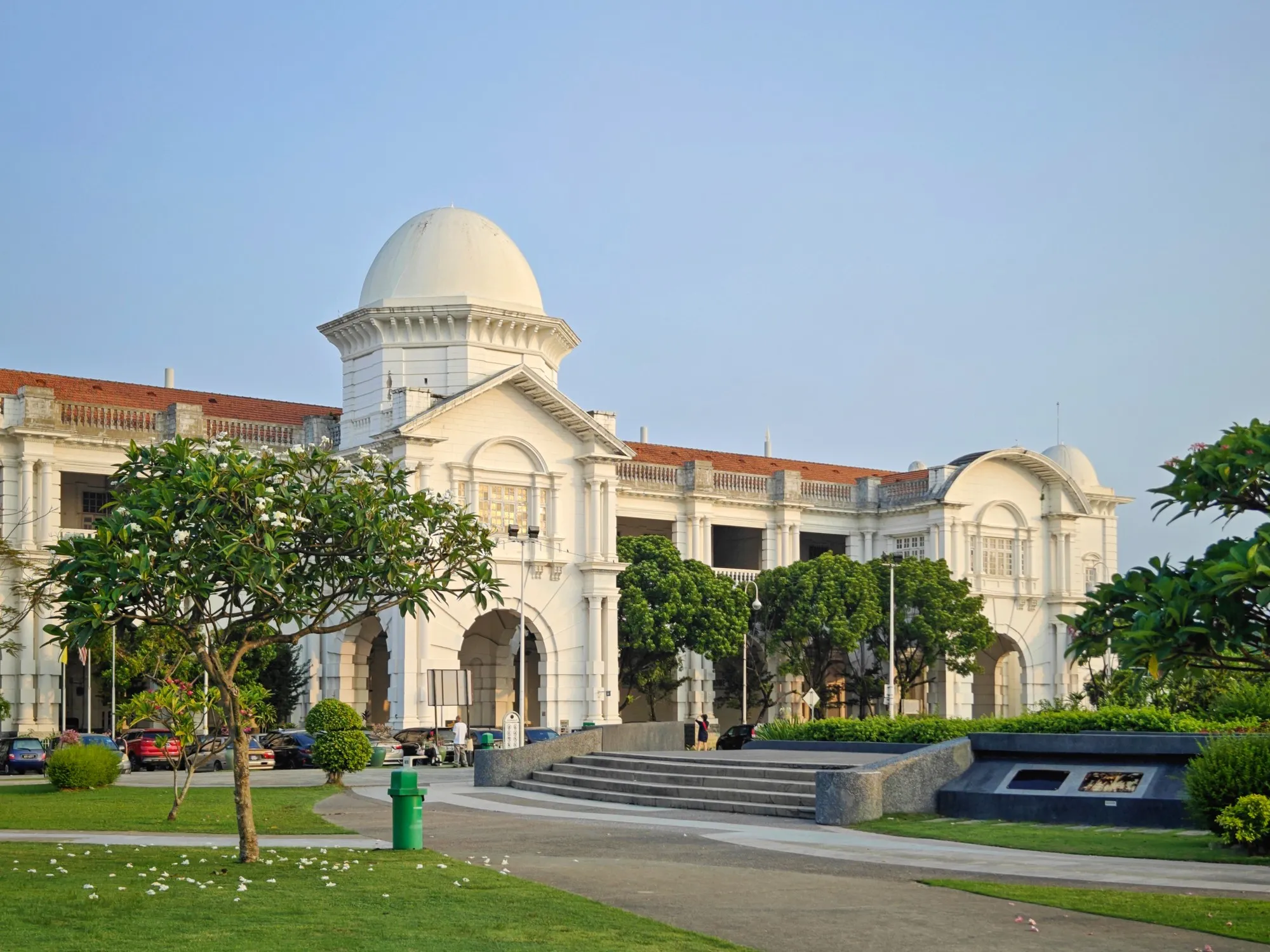
In short: Ipoh Railway Station is the white, domed building in Ipoh’s Old Town, opposite the Town Hall. The colonial government architect A. B. Hubback designed it, and it was built from 1914, while the First World War slowed supplies. It opened around 1915–1917: 1917 is the usual date, but newspaper reports from the time suggest passengers were using it from October 1915, with the hotel following in 1917. Its domes earned it the nickname “the Taj Mahal of Ipoh”.
What is the history of Ipoh Railway Station?
Today’s building is Ipoh’s second station.
It replaced a wooden one, and its scale shows what Kinta tin had made the town worth. It was gazetted as a heritage site in 2020, and trains still stop here.
A wooden station for a tin town
Ipoh’s railway is said to have begun in 1894, with an 11-mile line between Ipoh and Batu Gajah. The first station was a modest wooden building.
Two years later, the Kinta Valley Railway to Telok Anson (now Teluk Intan) is said to have been completed and to have begun carrying tin ore. Our post on how tin made Ipoh tells that story.
A station to rival Kuala Lumpur
By 1895, Ipoh was already the largest town in Perak. The story goes that after Kuala Lumpur’s grand Mughal-style station opened in 1911, Ipoh’s leading residents called for a station that could match it. Kinta, they argued, earned much of the revenue and deserved one.
The job went to Arthur Benison Hubback, the government architect who had designed the Kuala Lumpur station. His drawing and floor plan for Ipoh is reportedly dated 27 February 1914. Part of the ground in front, it’s said, had once belonged to the hospital grounds.
Built during a war: 1915 or 1917?
Construction began in 1914, just as the First World War broke out. Shortages of building materials and rising costs delayed completion until 1917.
A more detailed story has been pieced together from old newspapers. In it, Hubback went on leave in 1914 and did not return to the Federated Malay States. Thomas Steele, sent to Ipoh in 1915 as Acting Assistant Government Architect, supervised the work. The new station is said to have opened to the public, without ceremony, on 1 October 1915, and a report that month described its booking halls, subways and platforms. The Station Hotel upstairs reportedly opened in May 1917.
If so, 1915 marks the station’s opening and 1917 the completion of the whole building. Those original reports have not been checked directly here, so treat 1915 as likely rather than settled.
Why “the Taj Mahal of Ipoh”?
Look up as you arrive. The station is three storeys high, its long white front topped with domes and small domed pavilions, with rows of arches below. The small roof towers are known as chhatri.
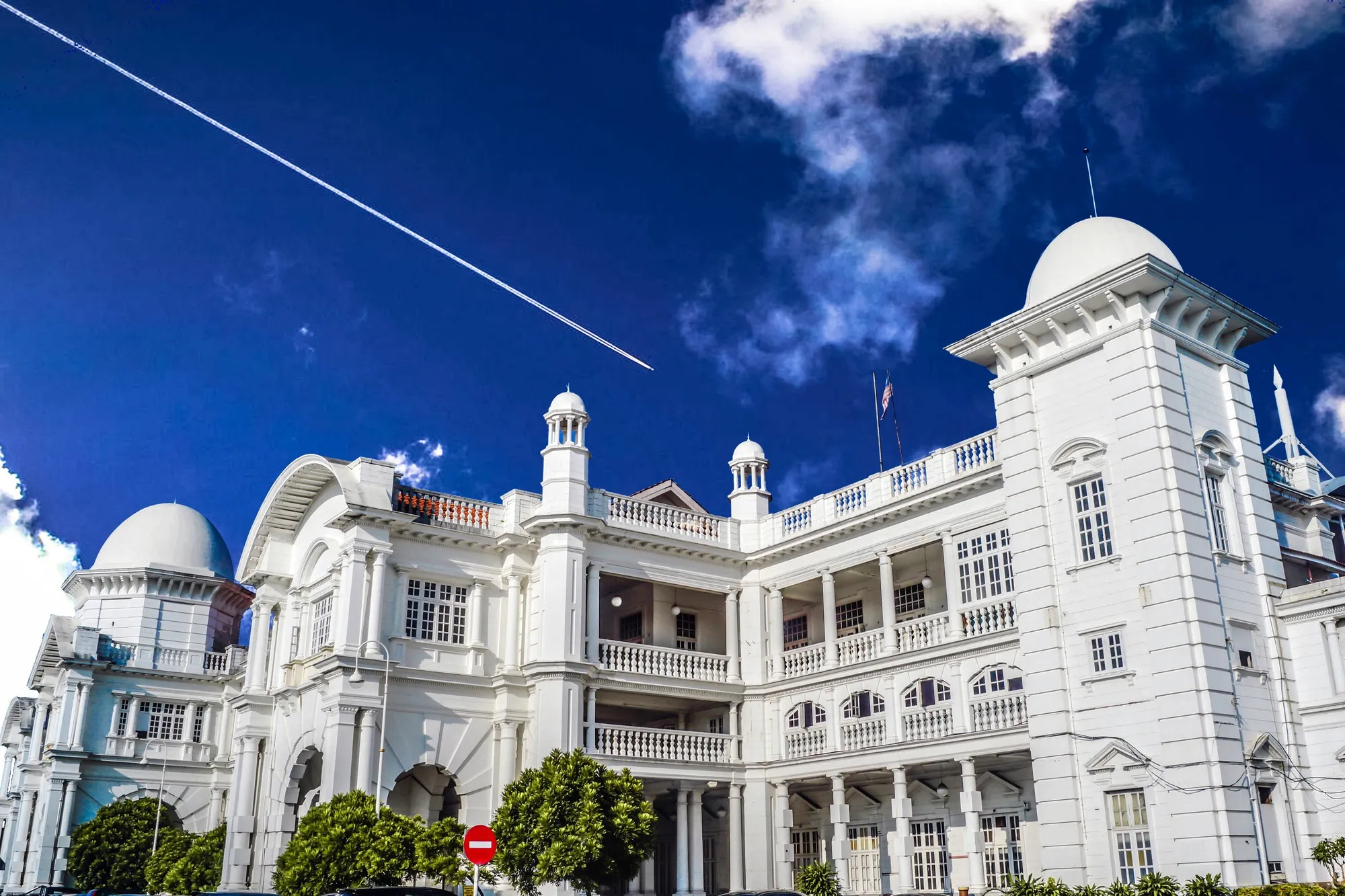
Writers describe British “Raj”-style classical elements with Moorish-style towers. Others call the style Mughal, and that’s where the nickname comes from: the Taj Mahal is the model of Mughal architecture, so Ipoh’s station became the “Taj Mahal of Ipoh”. It’s often compared with the Kuala Lumpur, Seremban and Tanjong Pagar stations. Not everyone agrees on the label, though: some call the building Neo-Classical, others Indo-Saracenic.
The Station Hotel
For much of the 20th century, the upper floor was a hotel, latterly the Majestic Station Hotel. It’s said to have started with 17 rooms and had 21 by 1936, with wide verandahs and pressed-metal ceilings.
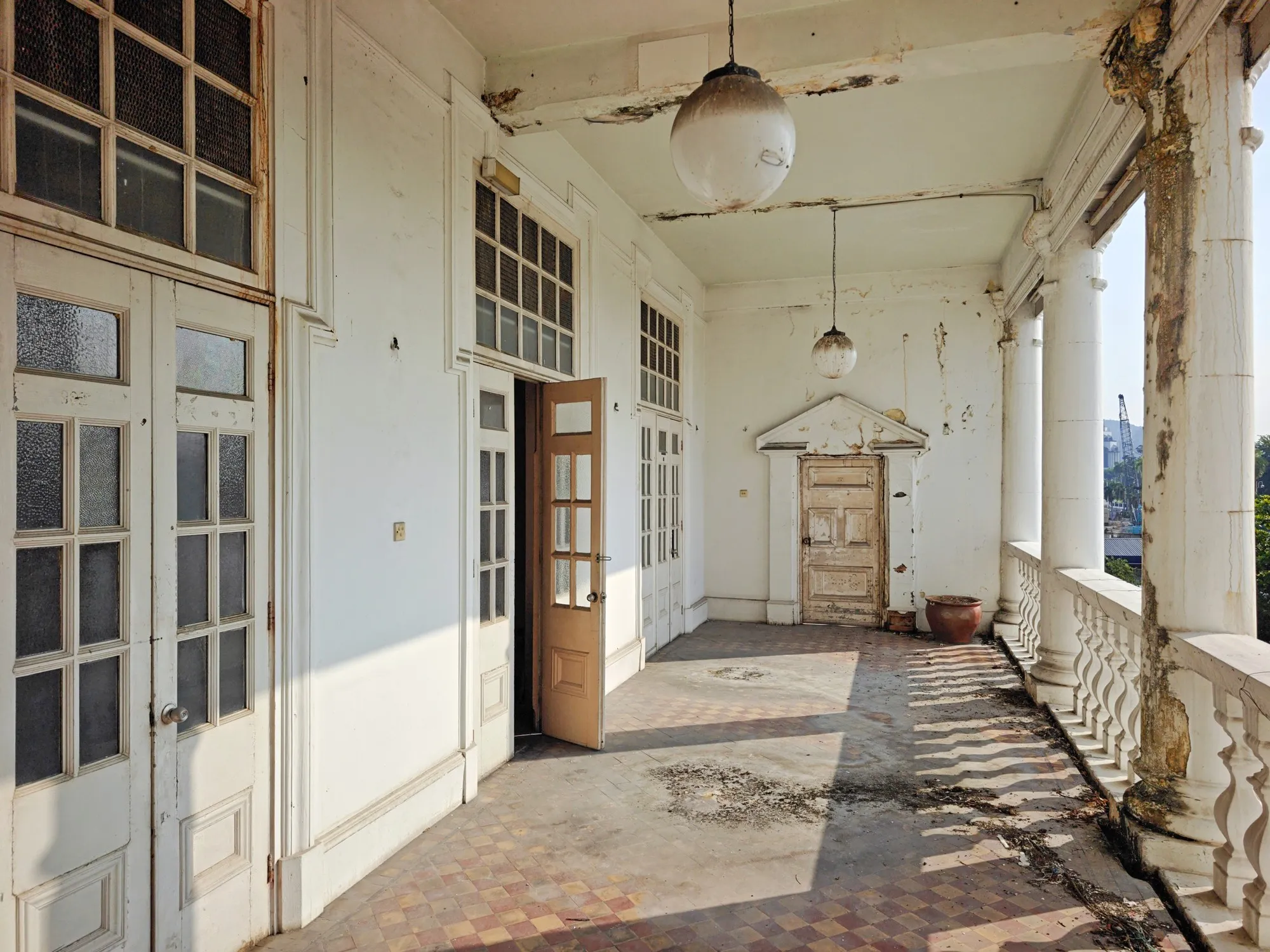
A member of a local heritage society recalls traders and notable visitors staying there, and an underground passage from the station towards a nearby Murugan temple.
The hotel’s dates are told differently. Some accounts date its opening to May 1917; others say it operated from 1935. Its closure is given as mid-2010 or March 2011.
The square in front
The open ground in front of the station holds a war memorial. The cenotaph is said to remember men from Perak who died in the First World War; it was planned in 1919 and unveiled in 1927.
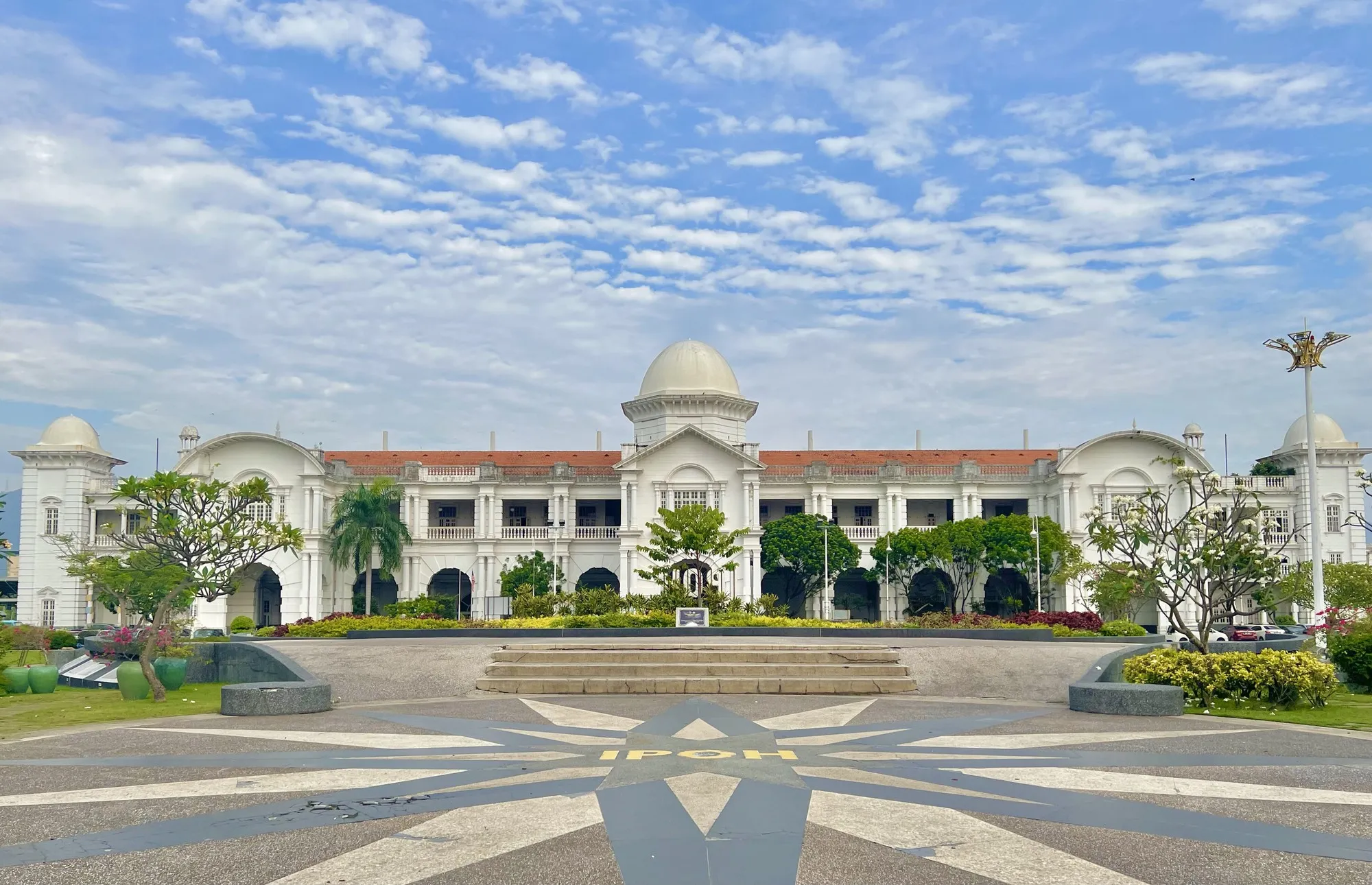
Across the square stands the Town Hall, also by Hubback and said to date from 1914–1916.
The station today
The station is still in use. Stesen Keretapi Ipoh is listed among Malaysia’s gazetted heritage sites, under gazette P.U. (B) 621 of 20 November 2020.
The building belongs to the Railway Assets Corporation, which completed works on the station in May 2025. The corporation says it plans to restore the hotel as part of a phased revitalisation. No reopening date has been announced.
What is still debated
- When the station opened: 1917 is the usual date; old newspaper reports suggest a public opening on 1 October 1915.
- When the hotel began: May 1917 or 1935, depending on the account.
- When the hotel closed: mid-2010 or March 2011.
- The architectural style: Mughal, Indo-Saracenic, Moorish or Neo-Classical, depending on the writer.
Have a family story or photo of the station or its hotel? Write to us at [email protected]. If you run a heritage venue, claiming a listing is coming soon: see aevum.my/businesses.
Report an error · Something wrong, incomplete or culturally insensitive? Tell us and we aim to review it within 5 working days.
Questions
What is the history of Ipoh Railway Station?
Ipoh's first station was a wooden building on the line to Batu Gajah, said to have opened in 1894. The present station was designed by A. B. Hubback and built from 1914, during the First World War. It opened around 1915–1917: 1917 is the usual date, though old newspaper reports suggest passengers used it from October 1915.
Who designed Ipoh Railway Station?
Arthur Benison Hubback, the colonial government architect who also designed Kuala Lumpur's railway station. His drawing for the Ipoh building is reportedly dated February 1914. Old newspaper reports suggest that Hubback went on leave that year, and that Thomas Steele of the Public Works Department supervised the building's completion.
Why is Ipoh Railway Station called the Taj Mahal of Ipoh?
The nickname comes from its domes, arches and small domed pavilions, which writers link to Mughal architecture. The idea is that the Taj Mahal is the model of Mughal architecture, so the station became the 'Taj Mahal of Ipoh'. Other writers describe the same building as Neo-Classical.
Is the station hotel still open?
No. The hotel on the station's upper floor, later known as the Majestic Station Hotel, closed around 2010 to 2011; accounts differ on the exact date. The Railway Assets Corporation, which owns the building, says it plans to restore the hotel as part of a phased revitalisation. No reopening date has been given.
Sources
Jabatan Warisan Negara, Tapak Warisan list; Ipoh City Council (MBI), “Info Ipoh”; Sin Chew Daily (2019); Ipoh Echo (2023, 2025); Free Malaysia Today (2020); britishmalaya.home.blog (2019); “Stesen Keretapi Ipoh” heritage inventory (pdfcoffee.com); Corey Ross, Environmental History (2014); The Star (2011, via Transit Malaysia); Malay Mail (2020); Railway Assets Corporation; Ipoh World.