Heritage & Roots · Explorers
What Makes George Town's Cultural Scene Worth Knowing
George Town, Penang, began as a free port in 1786. Its street of four faiths, clan houses, water villages and food tell the story. Aevum is coming soon.
By Aevum Editorial, written by Joan V. · Published · Updated
In short: George Town was founded in 1786 as a British East India Company free port on Penang Island, and merchants from China, India, the Arab world and the Malay world settled side by side. In 2008 its old town joined Melaka on UNESCO’s World Heritage List. Its culture lives in a street of four faiths, grand clan houses, water villages on stilts, the murals of 2012 and food so central to local life that the state gazetted its best-known dishes as heritage in 2026.
Aevum in George Town: coming soon
Aevum is coming soon to George Town. Our first city is Ipoh. This guide is a first look at the places and stories we are preparing for Penang, each checked against its sources.
How did George Town begin?
As a port.
Francis Light of the British East India Company received verbal permission from the Sultan of Kedah to set up a settlement on Penang. He landed on 17 July 1786 at the point where Fort Cornwallis stands today. George Town was run as a free port, and it drew merchants largely from China, India and the Arab world. In 1826, Penang, Melaka and Singapore were brought together as the Straits Settlements.
The port shaped the town, and losing it shaped the town again. When George Town’s free-port status was revoked in 1969, much of the port’s work moved to the mainland. In the decades that followed, residents, community groups and the state turned to the old town’s heritage, and in 2008 George Town and Melaka were inscribed together as a World Heritage Site. UNESCO calls the two towns a “living testimony to the multi-cultural heritage and tradition of Asia”.
Heritage places worth knowing
Fort Cornwallis
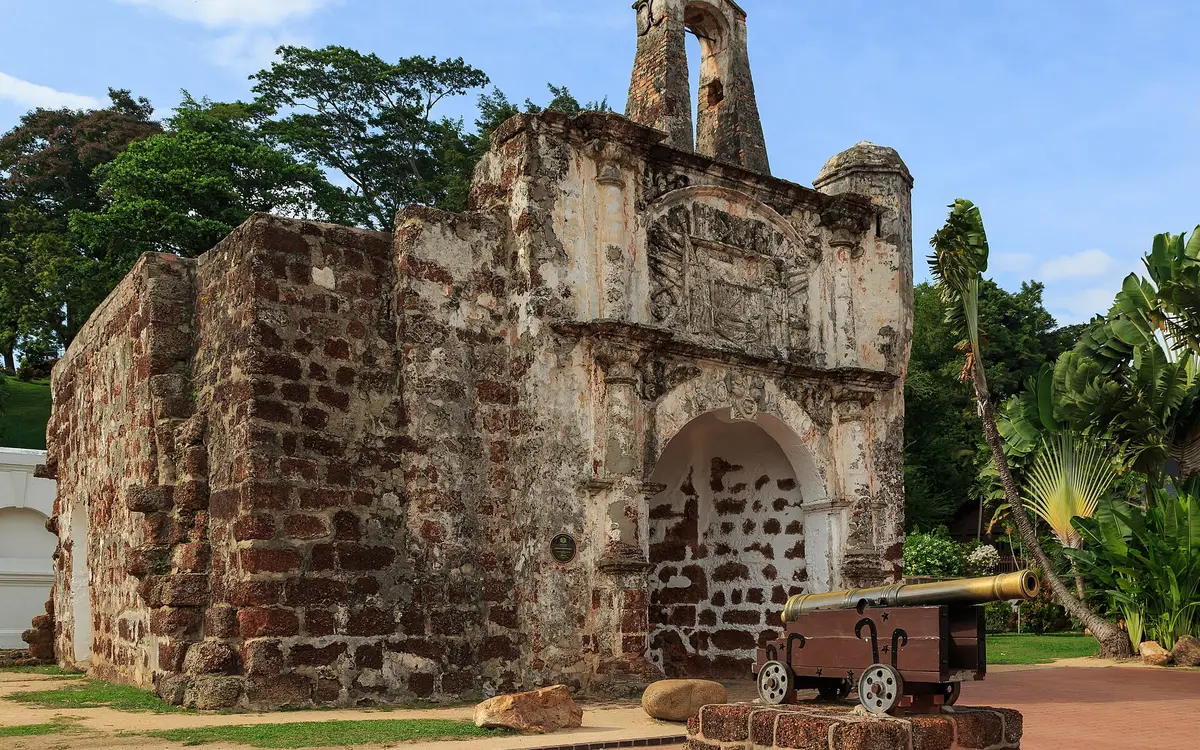
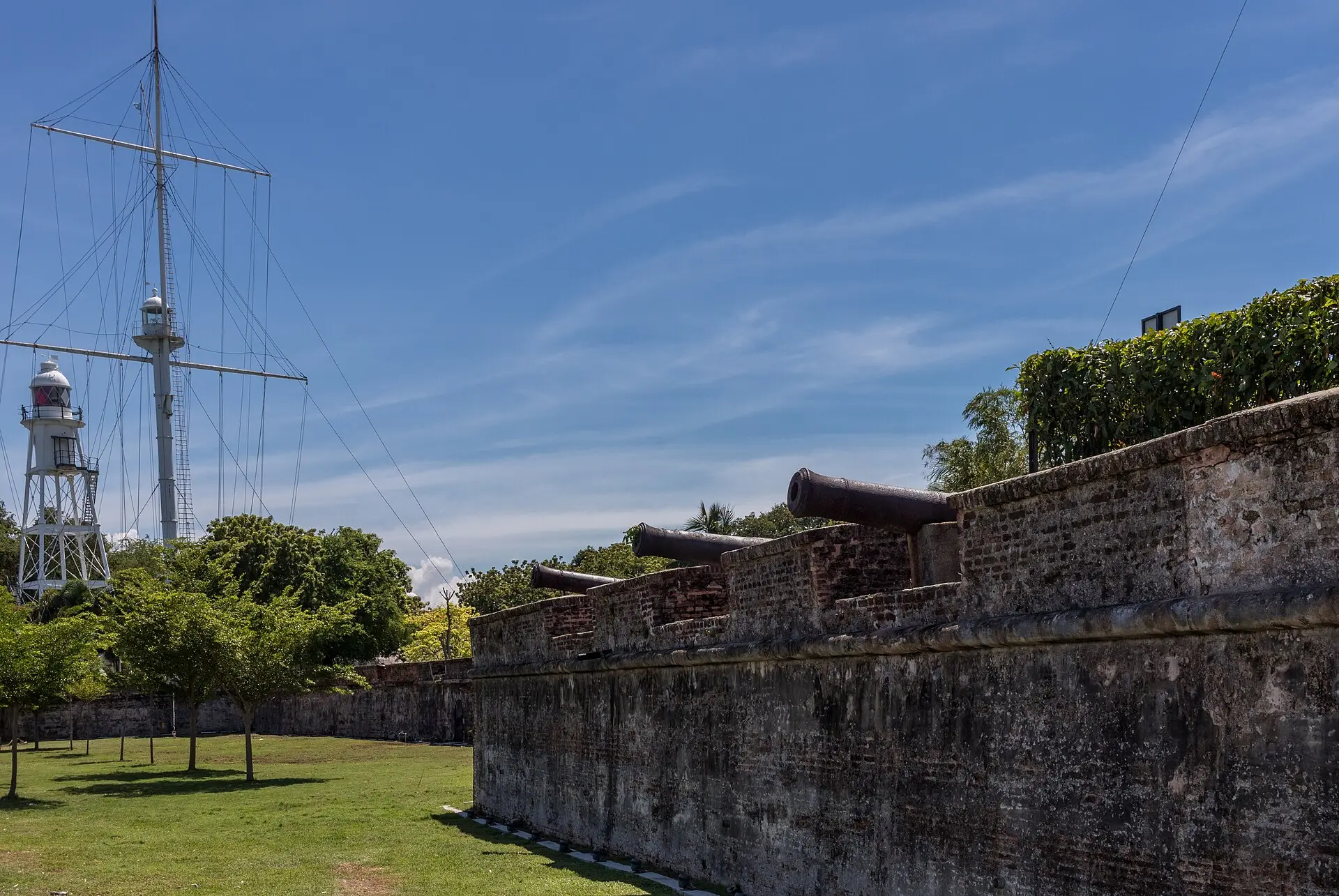
This is where the settlement began. Within two weeks of Light’s landing, a timber fort was laid out on the same spot. It was rebuilt in brick from 1793, as war broke out between Britain and France, and finished in its present form in 1804–05. In 2026, the state gazetted it as a heritage site.
The Street of Harmony
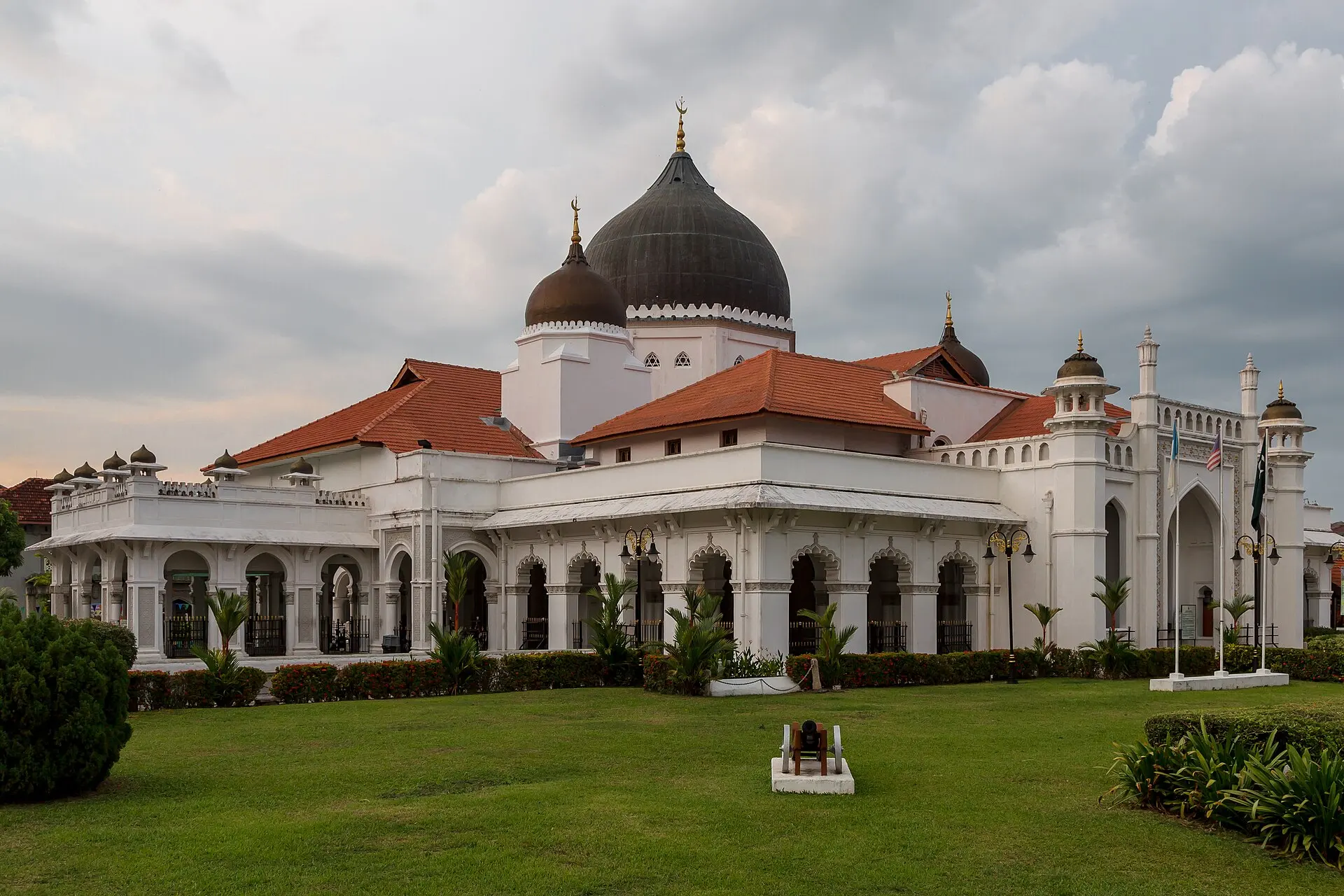
Jalan Masjid Kapitan Keling, once Pitt Street, has four faiths within a short walk. St George’s Church, paid for by the East India Company, opened on Christmas Day 1818. Kuan Yin Teng, the Goddess of Mercy Temple, was founded in 1800 by the Hokkien and Cantonese communities together, and it also served as a centre for the island’s Chinese community. Then come Sri Mahamariamman Temple and the Kapitan Keling Mosque, founded in 1801 by the South Indian Muslim trader Cauder Mohudeen. The mosque began as a timber hut with a nipah roof, and its minaret was added in 1917. The mosque and the church were among the sites gazetted by the state in 2026.
Leong San Tong Khoo Kongsi
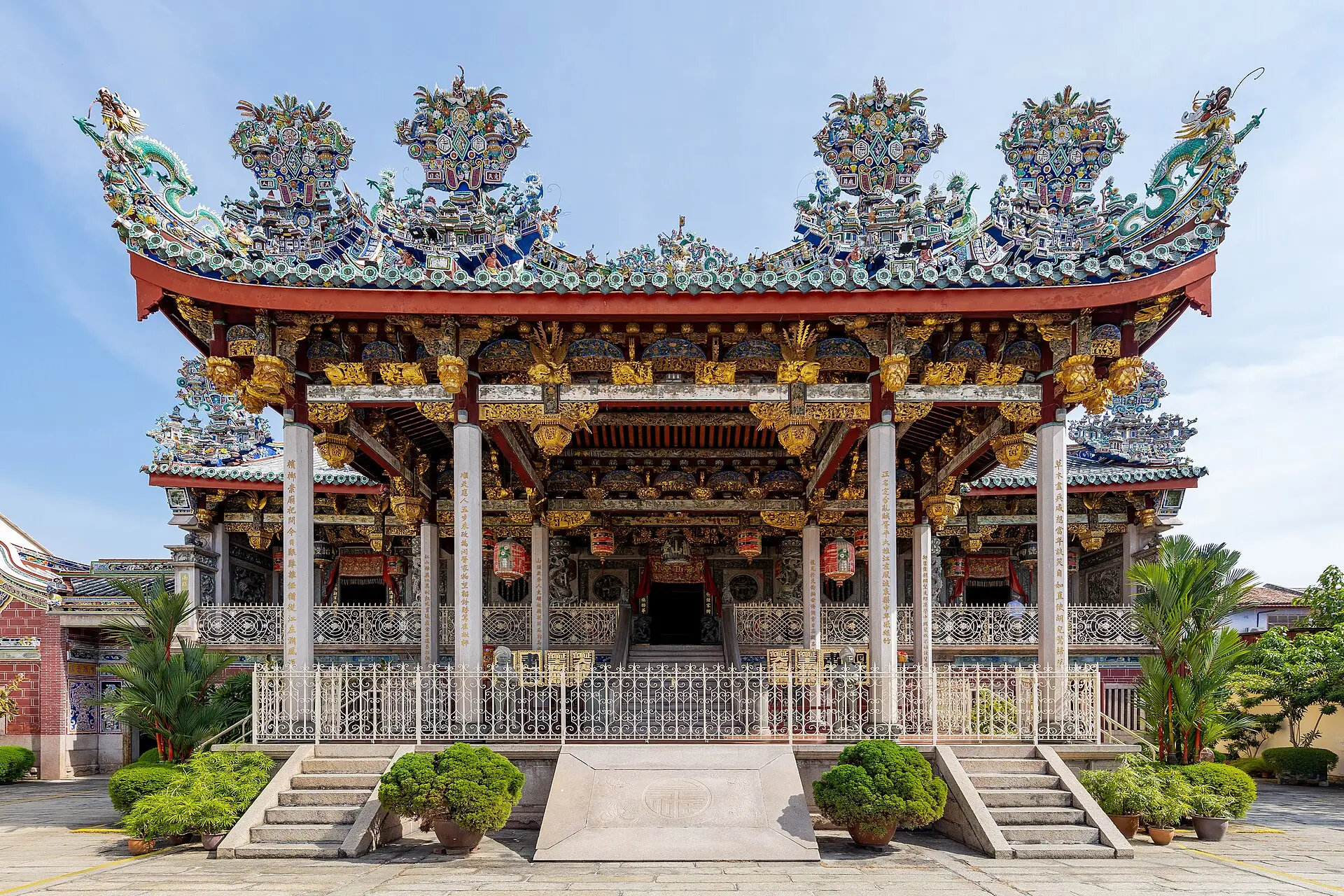
Leong San Tong Khoo Kongsi (龍山堂邱公司) is the clan house of the Khoo families. The present hall was completed in 1906, after the previous hall burned down on Chinese New Year’s Eve in 1901. Its roof ridges carry dragons made of porcelain shards, and the clan says most of its structure and decoration follows the southern Fujian style. Our guide to temples, mosques and clan houses looks at its carvings in more detail.
The Clan Jetties
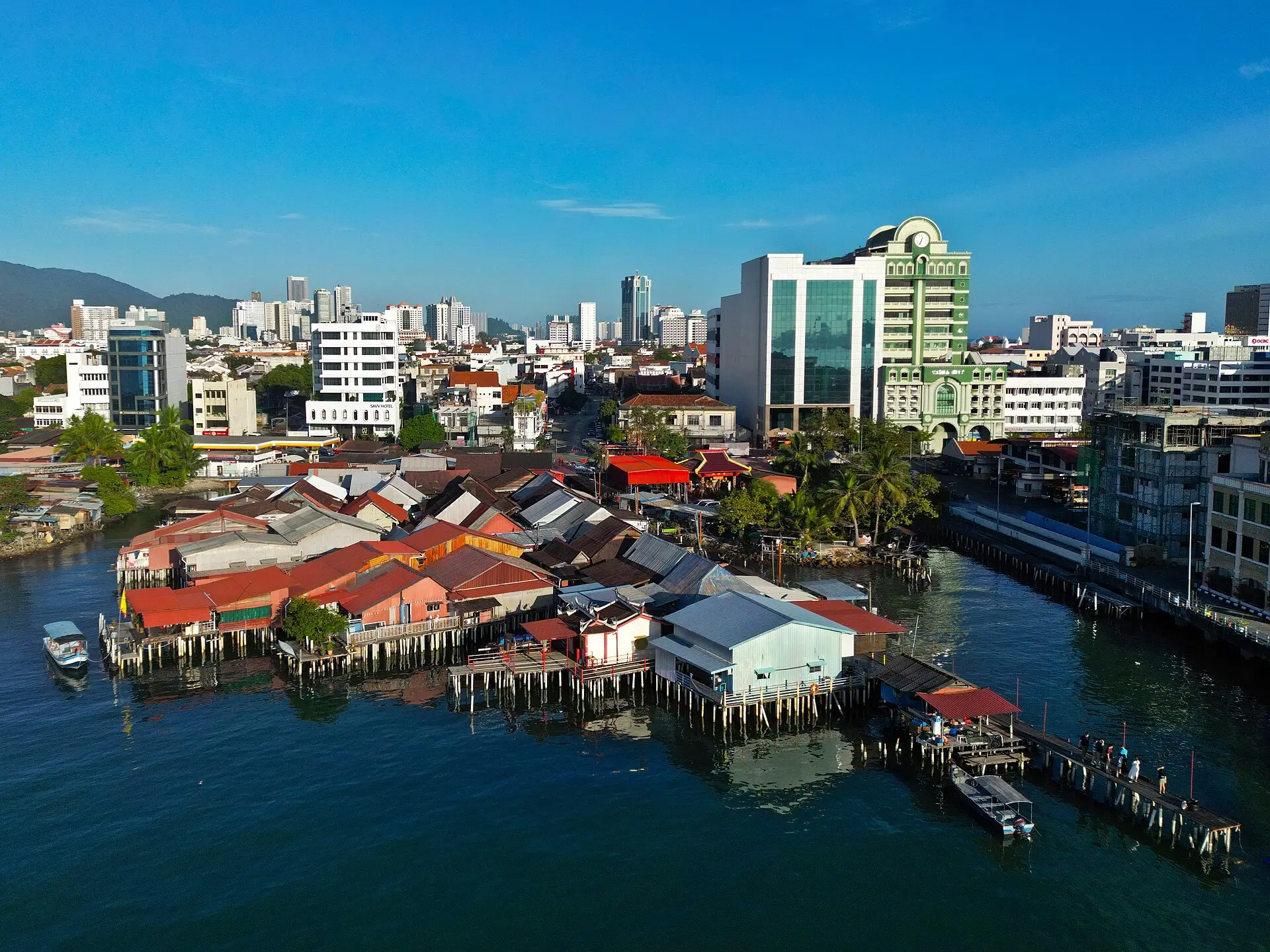
Along Weld Quay, rows of wooden houses stand on stilts over the sea, joined by plank walkways. They began as landing jetties and sheds, and in the late 19th century they became homes for Hokkien immigrants who shared a surname and came from similar home towns in China. Each jetty grew around one clan. The Ongs, Lims, Chews and Lees worked as boatmen and carried cargo, while others traded in charcoal and firewood. Chew Jetty is the biggest. These are lived-in homes, so walk quietly and respect residents’ privacy.
The murals of 2012
For the 2012 George Town Festival, the artist Ernest Zacharevic painted a set of murals in the old town, including Children on a Bicycle on Armenian Street, with a real bicycle fixed to the wall. Armenian Street, once a quiet lane, soon had queues of visitors. The state commissioned him to restore four of the best known in 2024. The same artist went on to paint Ipoh’s Art of OLDTOWN murals in 2014.
Food as heritage
In George Town, food is heritage by law. In 2026, Penang gazetted dishes under its State Heritage Enactment 2011, including asam laksa, char kway teow, cendol, teh tarik, roti canai, mi goreng mamak and kari kapitan. Earlier that year it also recognised nasi kandar culture, kopitiam culture, and the Thaipusam and Chingay processions. Penang’s asam laksa, sour with tamarind and fish, is a world away from Melaka’s coconut curry laksa, as our post on the Peranakan explains.
Why it is worth knowing
George Town packs centuries into a few streets. A fort, a church, a temple, a mosque, a clan house and a water village each tell you who came to this port, what they believed and how they lived side by side. And many of these places are still used by the communities who built them.
Visiting respectfully
- Places of worship and clan houses are sacred spaces first. Dress modestly and follow the guidance at the entrance.
- Ask before photographing people, prayers or ceremonies.
- The Clan Jetties are people’s homes. Keep your voice down and don’t go past doorways uninvited.
What is still debated
- The 1786 arrangement with Kedah: heritage guides describe Light’s verbal permission from the Sultan of Kedah; legal historians still debate what was agreed, and whether any formal transfer took place.
Know a place in George Town with a story we should tell? Write to us at [email protected].
Report an error · Something wrong, incomplete or culturally insensitive? Tell us and we aim to review it within 5 working days.
Questions
When was George Town founded?
George Town was founded in 1786 as a free port of the British East India Company. Francis Light, with verbal permission from the Sultan of Kedah, landed on 17 July 1786 at the point where Fort Cornwallis stands today. The port drew merchants largely from China, India and the Arab world.
Why is George Town a UNESCO World Heritage Site?
George Town was inscribed with Melaka in 2008 as "Melaka and George Town, Historic Cities of the Straits of Malacca". UNESCO says the two towns show 500 years of trade between East and West. George Town represents the British era from the end of the 18th century, with a living mix of faiths, languages, festivals and food.
What is the Street of Harmony in George Town?
It is the name given to Jalan Masjid Kapitan Keling, once Pitt Street, where a church, a Chinese temple, a Hindu temple and a mosque stand within a short walk: St George's Church, Kuan Yin Teng, Sri Mahamariamman Temple and Kapitan Keling Mosque.
What are the Clan Jetties of Penang?
They are water villages of wooden houses on stilts along Weld Quay, joined by plank walkways. They became homes in the late 19th century for Hokkien immigrants who shared a surname and came from similar home towns in China. Chew Jetty is the biggest. They are lived-in communities, so visit respectfully.
Is Aevum available in George Town?
Not yet. Aevum is coming soon to George Town. Our first city is Ipoh. This guide is an early look at the places and stories we are preparing for Penang.
Sources
All accessed 31 October 2026.
- UNESCO World Heritage Centre, “Melaka and George Town, Historic Cities of the Straits of Malacca”
- UNESCO World Heritage Centre, “From port city to World Heritage site: case study of George Town (Malaysia)”
- George Town World Heritage Incorporated, A Guide to George Town’s Historic Commercial and Civic Precincts (PDF)
- George Town World Heritage Incorporated, The Clan Jetties of George Town (PDF)
- George Town World Heritage Incorporated, A Guide to Selected Chinese Clan Houses in the George Town World Heritage Site (PDF)
- Penang State Government, state heritage register (Daftar Warisan Peringkat Negeri), 2026 (PDF)
- New Straits Times, “Penang gazettes Fort Cornwallis, asam laksa among 50 heritage items”, 28 May 2026
- Penang Global Tourism (mypenang.gov.my), “Street of Harmony”
- eRIBI (Penang state directory of non-Muslim places of worship), “Tokong Dewa Kuan Yin Teng (Kong Hock Keong)”
- Kong Hock Keong, “A Historical Sketch of Kong Hock Keong” (PDF, via xiao-en.org)
- “Constructing New Meanings of Chinese Architectural Heritage in the World Heritage Sites of Malacca Straits”, Built Heritage
- Utusan Malaysia, “Keistimewaan Masjid Kapitan Keling”, 4 September 2020
- Universiti Malaysia Kelantan, “Kajian Sejarah dan Perkembangan Masjid Kapitan Keling, Georgetown, Pulau Pinang” (thesis, PDF)
- Leong San Tong Khoo Kongsi, “The Origin and Establishment”
- Leong San Tong Khoo Kongsi, “The Architectural Structure of Leong San Tong”
- Malay Mail, “Preserving Penang’s pride: In mural makeover, Zacharevic brings back beloved ‘Children on Bicycle’ and more”, 25 September 2024
- The Straits Times, “Four iconic Penang murals restored by Lithuanian artist Ernest Zacharevic after 12 years”, 17 October 2024
- Visit Penang, “Little Children on a Bicycle”
- “The 1786 Acquisition of Pulau Pinang: Unveiling the Light Letters …”, Kajian Malaysia, 2021
- Aevum, “Who Are the Peranakan? Baba-Nyonya and Chitty Explained”