Heritage & Roots · Explorers
What Makes Melaka's Cultural Scene Worth Knowing
Melaka was a sultanate's port, then Portuguese, Dutch and British. Its fort gate, temples, mosques and Peranakan homes tell its story. Aevum: coming soon.
By Aevum Editorial, written by Joan V. · Published · Updated
In short: Melaka was founded around 1400 as the port of a Malay sultanate, and it became one of the great trading cities of Southeast Asia. The Portuguese took it in 1511, the Dutch in 1641 and the British after them, and each left buildings behind. Add the Chinese, Indian and Malay communities who made the town their home, among them the Baba-Nyonya and the Chitty, and you have the city that UNESCO listed in 2008 for showing the earliest layers of the Straits’ shared history.
Aevum in Melaka: coming soon
Aevum is coming soon to Melaka. Our first city is Ipoh. This guide is a first look at the places and stories we are preparing for Melaka, each checked against its sources.
How did Melaka begin?
With a refugee prince and a river mouth.
Around 1400, Parameswara, the ruler of Temasek (now Singapore), fled from the forces of the Javanese kingdom of Majapahit and found refuge at a small fishing village on the Melaka River. There he founded a Malay kingdom. Its port became a major stop for traders, who came to restock food and fresh water and to trade, and merchants from India, Arabia and China visited regularly.
Then came the Europeans. In 1511, the Portuguese under Afonso de Albuquerque conquered Melaka. The Dutch took it in 1641. The British interrupted Dutch rule in 1795, and the Anglo-Dutch Treaty of 1824 settled Melaka in British hands. In 1826 it became one of the Straits Settlements, with Penang and Singapore.
UNESCO sums it up in one line: Melaka’s “government buildings, churches, squares and fortifications” show the early stages of this history, from the 15th-century Malay sultanate to the Portuguese and Dutch periods.
Heritage places worth knowing
A Famosa and the Porta de Santiago
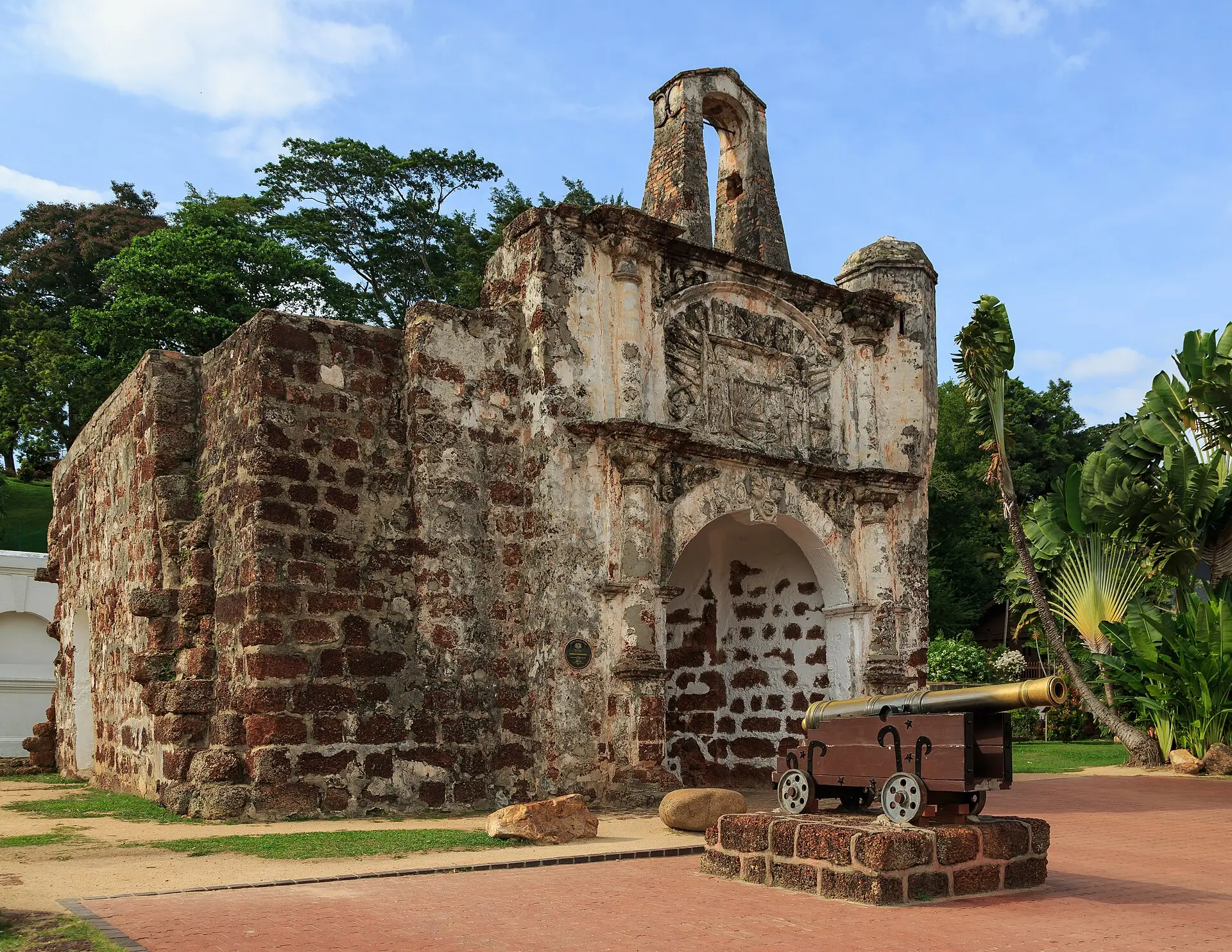
The Portuguese built a fortress on the hill by the river after their conquest, and called it A Famosa, “the famous”. Of the whole fort, only one gatehouse survives: the Porta de Santiago. The Dutch, who captured Melaka in 1641, added the inscription “Anno 1670” above the arch. In the early 19th century the British ordered the fort demolished. Local tradition says Stamford Raffles stepped in to save the gate.
St Paul’s Hill
Above the gate stand the roofless walls of St Paul’s Church, built by the Portuguese in 1521. In 1553 it briefly held the body of the missionary Francis Xavier, before the body was taken to Goa in India. From the hilltop you can look down over the old town and the river mouth where the port began.
The Stadthuys and Dutch Square
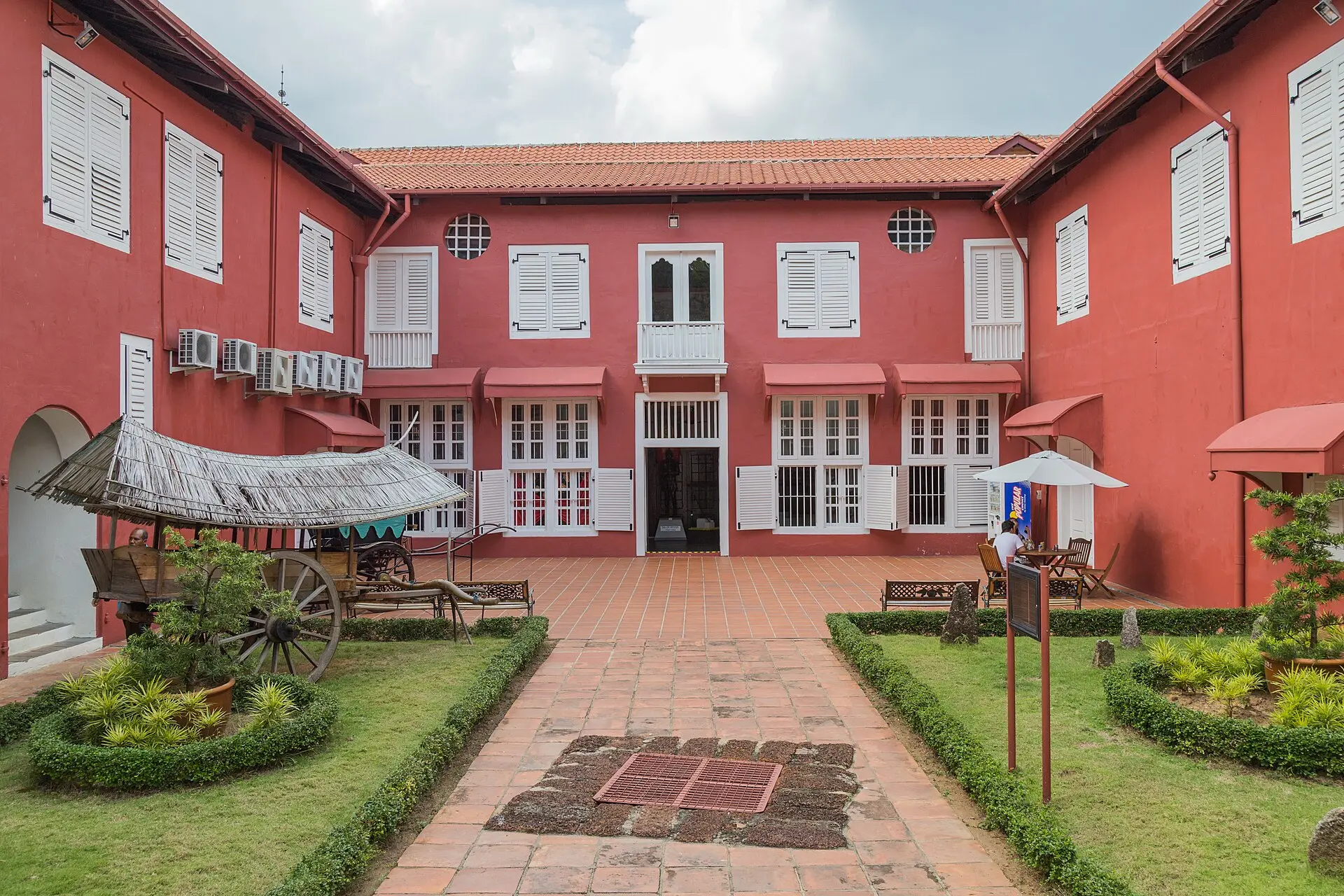
The Stadthuys, or town hall, is a fine example of mid-17th-century Dutch architecture, usually dated to 1650. It served as the office and residence of the Dutch governors, and it is often described as the oldest surviving Dutch building in the East. Today it houses a museum of history and ethnography.
Cheng Hoon Teng
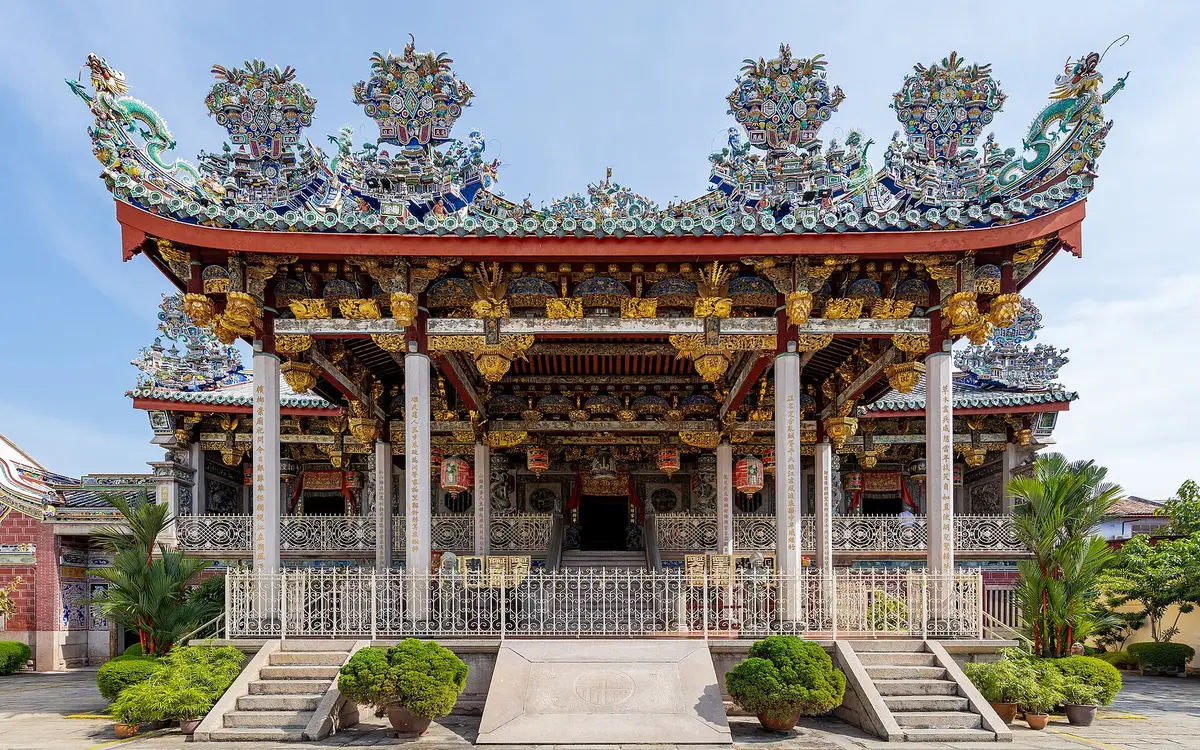
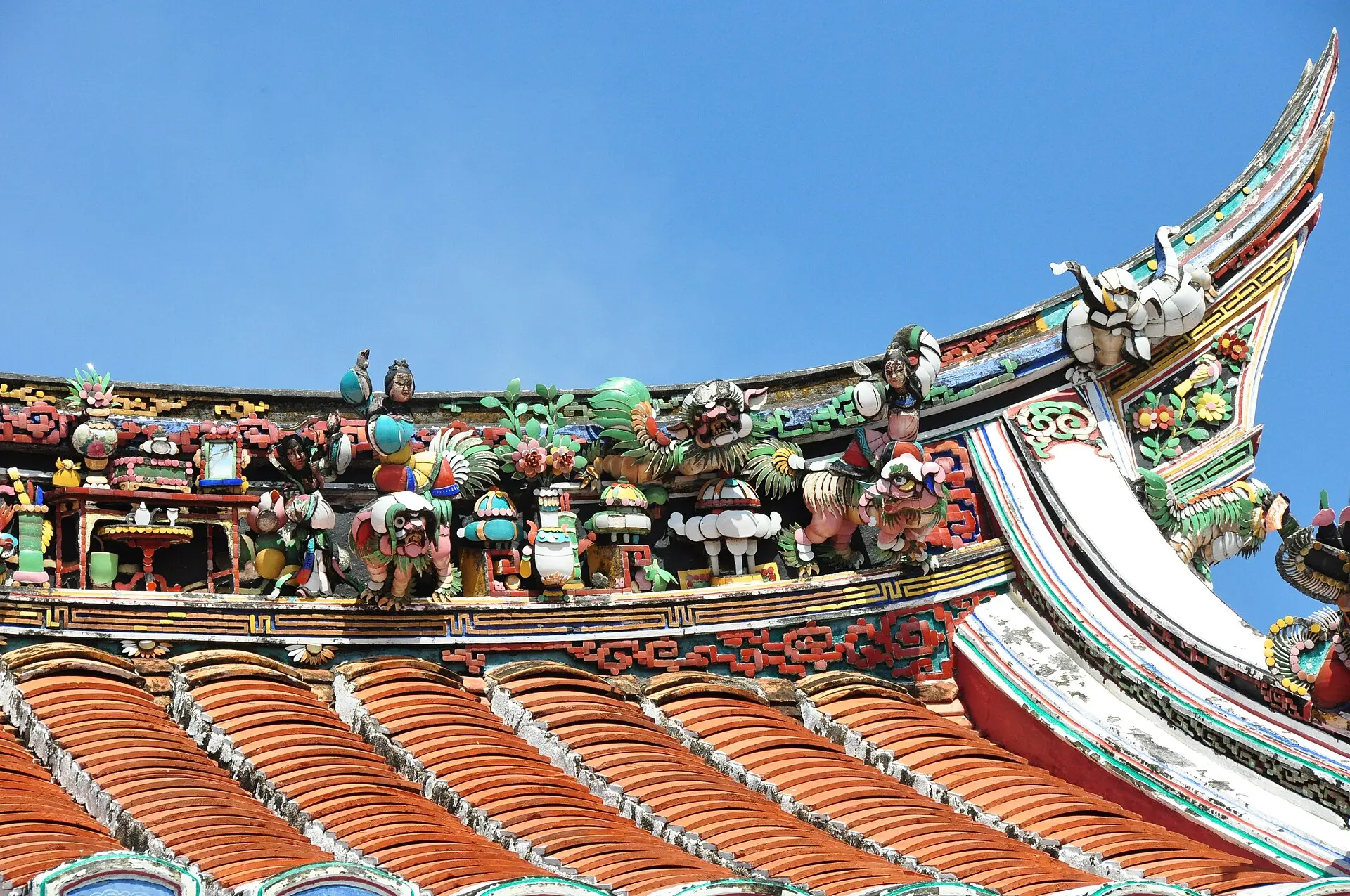
In the old town, Cheng Hoon Teng (青雲亭) dates back to the 17th century and calls itself Malaysia’s oldest traditional Chinese temple. In 2002, its restoration won an Award of Merit in UNESCO’s Asia-Pacific Awards for Cultural Heritage Conservation. Its roof ridges carry dragons, phoenixes and other figures made of porcelain shards, a Hokkien craft our guide to temples, mosques and clan houses explains.
Masjid Kampung Hulu
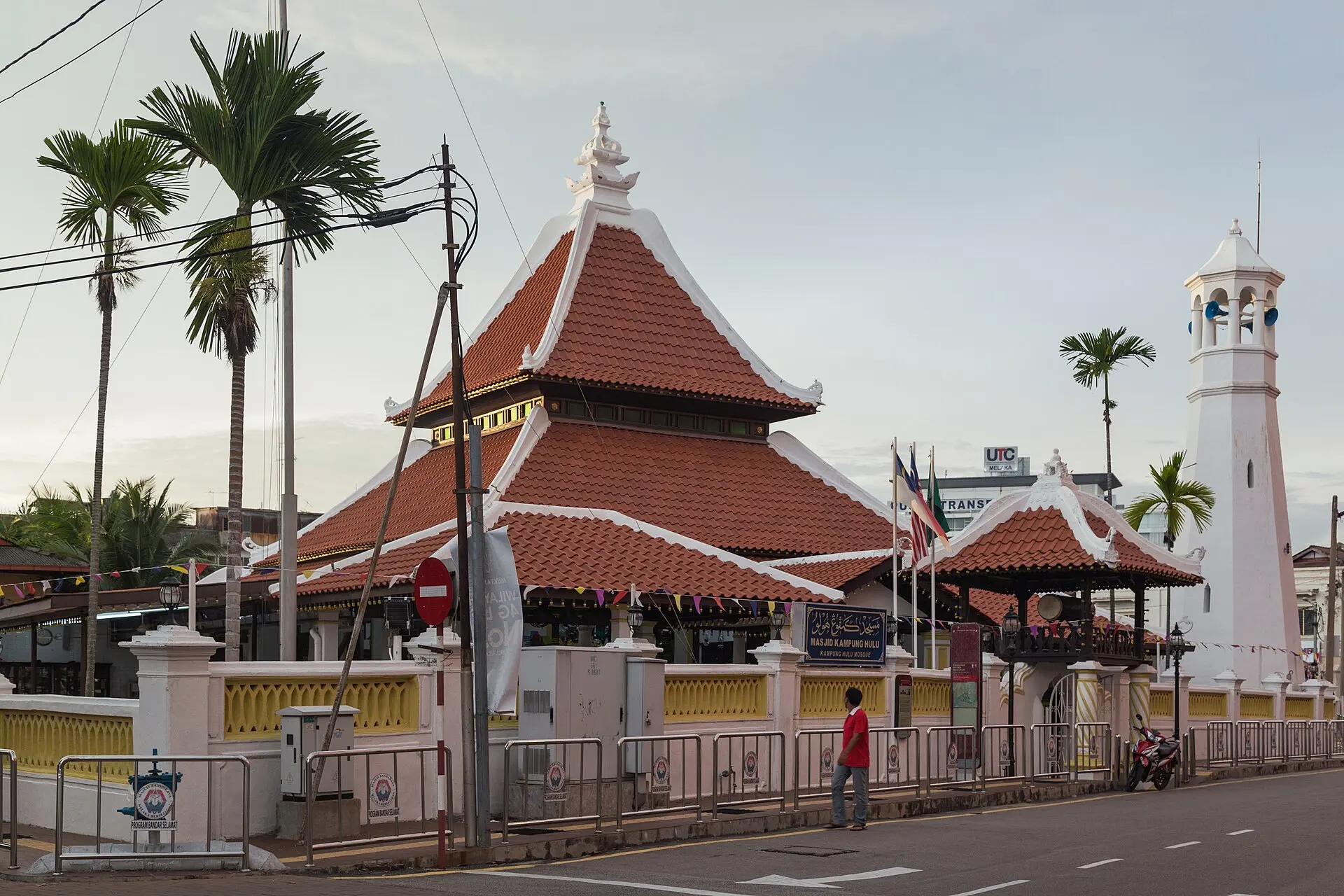
Melaka’s three oldest mosques, Masjid Kampung Hulu, Masjid Tengkera and Masjid Kampung Keling, don’t have onion domes. Instead they rise in a three-tiered pyramid roof, often called a meru roof, beside a pagoda-shaped minaret. Researchers see Chinese influence in these shapes, and the mosques used ceramic tiles from Qing-dynasty China. They show how many hands built Melaka.
The Baba-Nyonya and the Chitty
Melaka was the first home of the Baba-Nyonya, the Peranakan Chinese, whose ancestors married into local society and adopted Malay dress and speech. It is also home to the Chitty, descendants of Tamil traders from India’s Coromandel Coast who settled during the Melaka Sultanate and married local women. The Chitty kept their Hindu faith, and their village is Kampung Chetti in Gajah Berang. The Dutch granted land for the Sri Poyatha Venayagar Moorthi Temple there, and its title deed, dated 20 August 1781, still survives. Our post “Who are the Peranakan?” tells both stories in full, including the legend of Hang Li Po.
Nyonya food
Nyonya cooking blends Chinese techniques with Malay and Indonesian herbs and spices: chilli, lemongrass, galangal, turmeric, tamarind, candlenut and belacan. Melaka’s version is often described as sweeter than Penang’s, with Portuguese and Indonesian influences and more coconut milk. Compare a bowl of Melaka’s curry laksa with Penang’s sour asam laksa and you can taste the difference.
Why it is worth knowing
Melaka is where the story of the Straits begins. A sultanate’s port, a Portuguese gate, a Dutch town hall, a Hokkien temple, a mosque with a tiered roof and a Chitty village each hold a different chapter, often within walking distance of one another. Many of these places are still used by the communities who built them.
Visiting respectfully
- Temples and mosques are places of worship first. Dress modestly and follow the guidance at the entrance.
- Ask before photographing people, prayers or ceremonies.
- Kampung Chetti is a living neighbourhood with working temples. Visit quietly and respect residents’ privacy.
What is still debated
- When Cheng Hoon Teng was founded: sources agree on the 17th century, but give different years.
- Who saved the Porta de Santiago: the story that Raffles intervened is widely told, but it is tradition rather than documented fact.
- When the Peranakan Chinese began: dates range from the Melaka Sultanate in the 15th century to the 16th or 17th centuries.
Know a place in Melaka with a story we should tell? Write to us at [email protected].
Report an error · Something wrong, incomplete or culturally insensitive? Tell us and we aim to review it within 5 working days.
Questions
When was Melaka founded?
Melaka was founded around 1400 by Parameswara, a ruler who fled from Temasek (now Singapore) and set up a Malay kingdom at a small fishing village by the Melaka River. It grew into one of the great trading ports of Southeast Asia, until the Portuguese conquered it in 1511.
Why is Melaka a UNESCO World Heritage Site?
Melaka was inscribed with George Town in 2008 as "Melaka and George Town, Historic Cities of the Straits of Malacca". UNESCO says Melaka's government buildings, churches, squares and fortifications show the early stages of 500 years of trade between East and West, from the 15th-century Malay sultanate through the Portuguese and Dutch periods.
What is A Famosa in Melaka?
A Famosa was the fortress the Portuguese built after they conquered Melaka in 1511. Only one gatehouse, the Porta de Santiago, survives. The Dutch, who took Melaka in 1641, added the inscription "Anno 1670" above its arch. The British later ordered the fort demolished.
Who are the Baba-Nyonya and the Chitty of Melaka?
Both are Peranakan, or locally born, communities. The Baba-Nyonya descend from Chinese traders who settled and married local women, and adopted Malay dress and speech. The Chitty descend from Tamil traders from India's Coromandel Coast who settled during the Melaka Sultanate. They kept their Hindu faith, and their village is Kampung Chetti in Gajah Berang.
Is Aevum available in Melaka?
Not yet. Aevum is coming soon to Melaka. Our first city is Ipoh. This guide is an early look at the places and stories we are preparing for Melaka.
Sources
All accessed 31 October 2026.
- UNESCO World Heritage Centre, “Melaka and George Town, Historic Cities of the Straits of Malacca”
- Encyclopaedia Britannica, “Melaka”
- George Town World Heritage Incorporated, A Guide to George Town’s Historic Commercial and Civic Precincts (Straits Settlements background, PDF)
- Tourism Melaka, “A Famosa Fort”
- Tourism Melaka, “Stadthuys”
- Tourism Melaka, “St Paul’s Church”
- Construction Industry Development Board (CIDB), “Traces of History: Malaysia’s A’Famosa Architectural Heritage”, 2023
- Cheng Hoon Teng Temple, official site
- The Star, “Ancient Malacca temple wins Unesco merit award for restoration”, 16 January 2003
- Bernama via Malaysiakini, “Unravelling the significance of Malacca’s Masjid Kampung Hulu”, 2021
- “The Acculturation of Chinese Culture in the Design of Masjid Kampung Hulu”, IJARBSS, 2022
- Roots.gov.sg (National Heritage Board, Singapore), “Chetti Melaka of the Straits: Rediscovering Peranakan Indian Communities”
- “Hybridity and Ethnic Invisibility of the ‘Chitty’ Heritage Community of Melaka”, Heritage (MDPI), 2021
- “The development of Nyonya cuisine in the Malay Archipelago: Penang and Malacca Nyonya cuisine”, Journal of Ethnic Foods, 2019
- “Historical and contemporary perspectives of the Nyonya food culture in Malaysia”, Journal of Ethnic Foods, 2016
- Aevum, “Who Are the Peranakan? Baba-Nyonya and Chitty Explained”
- Wikipedia, “A Famosa”, “Stadthuys”, “Cheng Hoon Teng Temple” (cross-check only)