Events & Festivals · Explorers
Malaysia Festival Calendar: Dates, Meaning and How to Join In
Check the official 2026 and 2027 dates for Malaysia's major cultural and religious festivals, what they mean, and how visitors can join in respectfully.
By Aevum Editorial, written by Joan V. · Published · Updated
In short: Malaysia’s festival year follows more than one calendar: the Gregorian calendar for National Day and Malaysia Day, the lunar calendar for Chinese New Year, the Islamic calendar for Hari Raya, and community calendars for festivals such as Thaipusam, Wesak, Deepavali, Kaamatan and Gawai Dayak. Official 2026 and 2027 dates from the Prime Minister’s Department are in the tables below. Some religious dates are marked as subject to change. This guide covers what the major festivals mean and how visitors can join in with care.
What are Malaysia’s major cultural and religious festivals?
Malaysia’s major cultural and religious festivals include Chinese New Year, Hari Raya Puasa (Hari Raya Aidilfitri), Hari Raya Qurban (Hari Raya Aidiladha), Wesak, Deepavali, Christmas, Thaipusam, and the harvest festivals of Kaamatan in Sabah and Gawai Dayak in Sarawak. National Day and Malaysia Day are nationwide civic celebrations. Official dates differ by state for some festivals.
Tourism Malaysia describes the country as a place where people of different faiths and cultures celebrate through the year. The lists below are the gazetted dates, last checked on 12 November 2026. They are not a complete public-holiday list. States also observe rulers’ birthdays and other local days, which are in the official schedules linked in Sources.
[Early CTA] Want to find heritage places and quieter streets around festival time in Ipoh? Look for them in the Aevum app. Download the Aevum app (coming soon)
When are the official festival dates in 2026?
Last checked: 12 November 2026. Source: official federal and state schedules issued by the Cabinet, Constitution and Inter-Governmental Relations Division, Prime Minister’s Department. Dates marked with an asterisk are listed as subject to change. If a holiday falls on a Sunday, a replacement weekday is sometimes announced later; those days are not always printed in the main schedule, so check a current state notice before you travel.
| Festival | Date | Day | Where it is a public holiday |
|---|---|---|---|
| Thaipusam | 1 February 2026 | Sunday | WP Kuala Lumpur, WP Putrajaya, Johor, Negeri Sembilan, Perak, Pulau Pinang, Selangor |
| Chinese New Year (two days) | 17–18 February 2026 | Tuesday–Wednesday | Nationwide. The second day is a federal holiday in most states, and a state holiday in Kelantan and Terengganu |
| Nuzul Al-Quran | 7 March 2026 | Saturday | WP Kuala Lumpur, WP Labuan, WP Putrajaya, Kelantan, Pahang, Perak, Perlis, Pulau Pinang, Selangor, Terengganu |
| Hari Raya Puasa * (two days) | 21–22 March 2026 | Saturday–Sunday | Nationwide. Melaka also observes a third day on 23 March 2026 |
| Good Friday | 3 April 2026 | Friday | Sabah and Sarawak |
| Hari Raya Qurban * | 27 May 2026 | Wednesday | Nationwide. A second day on 28 May 2026 is a holiday in Kedah, Kelantan, Perlis and Terengganu |
| Pesta Kaamatan (Harvest Festival) | 30–31 May 2026 | Saturday–Sunday | Sabah and Labuan |
| Wesak | 31 May 2026 | Sunday | Nationwide |
| Gawai Dayak | 1–2 June 2026 | Monday–Tuesday | Sarawak |
| Awal Muharram (Maal Hijrah) | 17 June 2026 | Wednesday | Nationwide |
| Maulidur Rasul (Prophet Muhammad’s Birthday) | 25 August 2026 | Tuesday | Nationwide |
| National Day (Hari Kebangsaan) | 31 August 2026 | Monday | Nationwide |
| Malaysia Day | 16 September 2026 | Wednesday | Nationwide |
| Deepavali * | 8 November 2026 | Sunday | Nationwide except Sarawak |
| Christmas | 25 December 2026 | Friday | Nationwide |
New Year’s Day, 1 January 2026, is a state holiday in most of the country, but not in Johor, Kedah, Kelantan, Perlis or Terengganu. Federal Territory Day, 1 February 2026, falls on the same date as Thaipusam and is a holiday in Kuala Lumpur, Labuan and Putrajaya.
When are the official festival dates in 2027?
Last checked: 12 November 2026, from the same official 2027 schedules. Dates marked with an asterisk remain subject to change.
| Festival | Date | Day | Where it is a public holiday |
|---|---|---|---|
| Thaipusam | 22 January 2027 | Friday | WP Kuala Lumpur, WP Putrajaya, Johor, Negeri Sembilan, Perak, Pulau Pinang, Selangor |
| Chinese New Year (two days) | 6–7 February 2027 | Saturday–Sunday | Nationwide. The second day is a federal holiday in most states, and a state holiday in Kelantan and Terengganu |
| Nuzul Al-Quran | 24 February 2027 | Wednesday | WP Kuala Lumpur, WP Labuan, WP Putrajaya, Kelantan, Pahang, Perak, Perlis, Pulau Pinang, Selangor, Terengganu |
| Hari Raya Puasa * (two days) | 10–11 March 2027 | Wednesday–Thursday | Nationwide. Melaka also observes a third day on 12 March 2027 |
| Good Friday | 26 March 2027 | Friday | Sabah and Sarawak |
| Hari Raya Qurban * | 17 May 2027 | Monday | Nationwide. A second day on 18 May 2027 is a holiday in Kedah, Kelantan, Perlis and Terengganu |
| Wesak | 20 May 2027 | Thursday | Nationwide |
| Pesta Kaamatan (Harvest Festival) | 30–31 May 2027 | Sunday–Monday | Sabah and Labuan |
| Gawai Dayak | 1–2 June 2027 | Tuesday–Wednesday | Sarawak |
| Awal Muharram (Maal Hijrah) | 6 June 2027 | Sunday | Nationwide |
| Maulidur Rasul (Prophet Muhammad’s Birthday) | 15 August 2027 | Sunday | Nationwide |
| National Day (Hari Kebangsaan) | 31 August 2027 | Tuesday | Nationwide |
| Malaysia Day | 16 September 2027 | Thursday | Nationwide |
| Deepavali * | 28 October 2027 | Thursday | Nationwide except Sarawak |
| Christmas | 25 December 2027 | Saturday | Nationwide |
New Year’s Day, 1 January 2027, is again a state holiday except in Johor, Kedah, Kelantan, Perlis and Terengganu. Federal Territory Day is 1 February 2027, in Kuala Lumpur, Labuan and Putrajaya.
How are the dates decided?
Fixed civic dates, such as National Day on 31 August and Malaysia Day on 16 September, do not move. Chinese New Year follows the lunar calendar, so the Gregorian date changes each year. Thaipusam, Wesak and Deepavali also move with their religious calendars.
Hari Raya Puasa, Hari Raya Qurban and some other Islamic dates are marked in the official schedules with an asterisk, “tertakluk kepada perubahan” (subject to change). They follow the Islamic calendar and may be confirmed after a moon-sighting announcement. If you are planning around Hari Raya, check a current official notice close to the date.
An official public holiday is not the same as the whole festive season. Families may travel and decorate for days around the gazetted date, and some shop rest days still apply. For how public and school holidays change the pace of a trip in Ipoh, see When Is Ipoh Crowded?.
What do the major festivals mean, and how are they experienced?
Chinese New Year
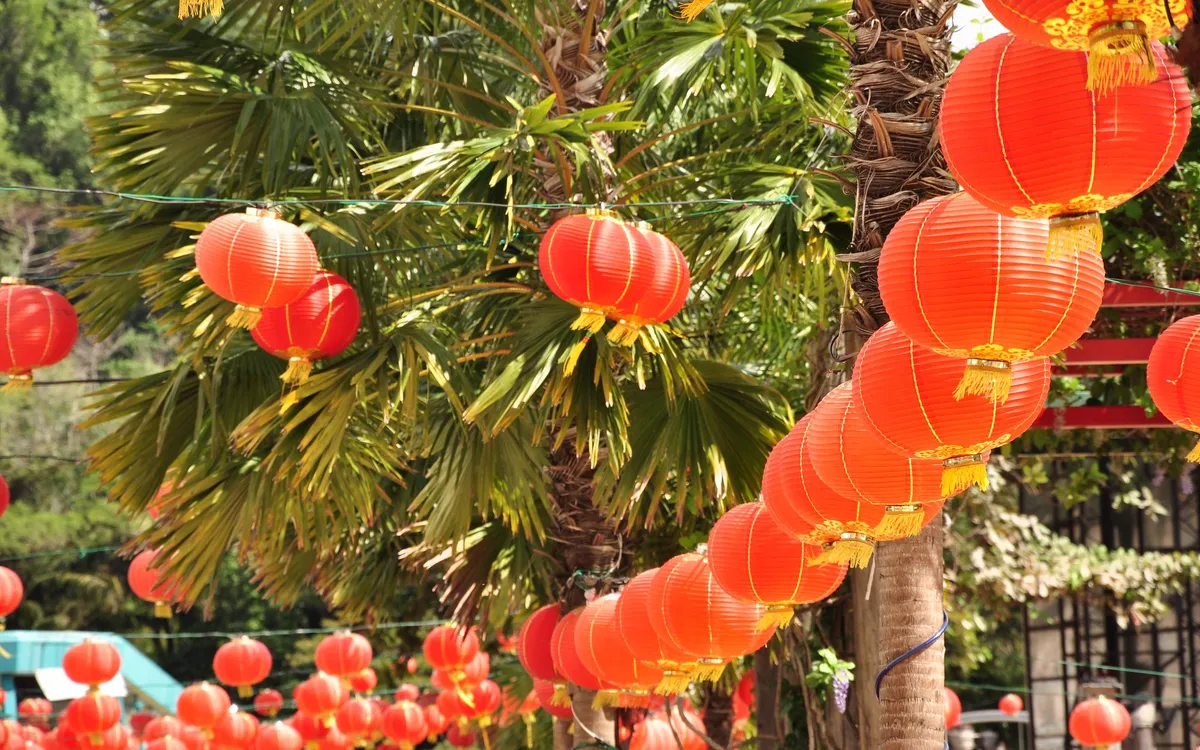
Chinese New Year is a nationwide public holiday, observed over two days. Tourism Malaysia describes the first day of the Lunar New Year as a time of decoration and street celebration, with red ang pow packets, plum blossoms, tangerines and lion dances.
Visitors will usually find festive lighting and family gatherings in towns with a large Chinese community. Some family shops close or keep shorter hours, especially on the first day. Greetings such as “Gong Xi Fa Cai” are commonly used; if you are invited into a home, a small gift of fruit or sweets is often welcome, and it is wise to ask before photographing family rituals.
Hari Raya Puasa (Hari Raya Aidilfitri)
Hari Raya Puasa, also called Hari Raya Aidilfitri, marks the end of Ramadan, the fasting month. Tourism Malaysia calls it the biggest festival in Malaysia, and describes houses and gardens lit at night, special morning prayers at mosques, and family visits to the graves of relatives.
Open-house visits are a large part of the days that follow. If you are invited, dress modestly, remove your shoes if the host does, and accept food and drink with the right hand. The official dates may still change, so confirm them before you travel. Some food shops close for the first days of Hari Raya; others stay open to serve visitors.
Hari Raya Qurban (Hari Raya Aidiladha)
Hari Raya Qurban is also known as Hari Raya Aidiladha or Hari Raya Haji. Tourism Malaysia describes it as a festival that marks the completion of the pilgrimage in Mekah (Mecca). Special morning prayers are held in mosques. It is common, the same guide says, for cattle, goats or ram to be sacrificed and the meat distributed to the poor.
This is a religious observance first, not a street carnival. Visitors who are not taking part can still be respectful by giving prayer spaces and processions room, and by not treating the sacrifice as a spectacle.
Wesak
Wesak commemorates, in Tourism Malaysia’s words, Lord Buddha’s birth, enlightenment and passing. Devotees take part in rituals and prayers at temples around the country. The same official guide mentions the release of doves at temples and a colourful float procession at night, which is a description of how the day is often marked in the capital; local temple programmes differ, so check with the temple you plan to visit.
Dress modestly, keep voices low inside prayer halls, and ask before photographing ceremonies or devotees.
Deepavali
Deepavali, also called Diwali, is widely known as the Festival of Lights. Tourism Malaysia notes that both names come from Sanskrit and refer to rows of lighted lamps, and that the festival is celebrated as the triumph of good over evil, or of light over darkness. In Malaysia, the same official feature describes kolam designs at entrances, new clothes, temple visits, family gatherings, and small oil lamps (diya) lit along paths and doorways at night.
It is a public holiday nationwide except in Sarawak, in the official 2026 and 2027 schedules. If you are invited to a home, it is customary to arrive in neat dress and not to step on a kolam at the door.
Thaipusam
Thaipusam is a Hindu festival in honour of Lord Murugan (Muruga). It is a public holiday in Kuala Lumpur, Putrajaya, Johor, Negeri Sembilan, Perak, Pulau Pinang and Selangor. Tourism Malaysia describes the well-known procession in the Kuala Lumpur area, in which an elaborately decorated chariot travels from the Sri Maha Mariamman Temple in Jalan Tun H.S. Lee to Batu Caves, accompanied by thousands of devotees.
It is a day of vow and pilgrimage. Visitors should give devotees space, dress modestly at the temple, and ask before taking photographs, especially of people carrying kavadi or in a state of prayer. In Perak, Thaipusam is also a public holiday, including in Ipoh; confirm local temple times before you go.
Christmas
Christmas is a nationwide public holiday on 25 December. Tourism Malaysia describes Christmas in Kuala Lumpur as a time of decorations at shopping malls, hotels and tourist hubs, with church services, carols and home visits among the Christian community. Similar public decorations appear in other cities. Midnight Mass and morning services are worship, not tourist shows; dress modestly if you attend.
In Sabah, Christmas Eve, 24 December, is also a state public holiday in the official schedules.
Kaamatan, Sabah and Labuan
Pesta Kaamatan, the harvest festival, is a public holiday in Sabah and Labuan on 30 and 31 May in both 2026 and 2027. The Sabah Tourism Board describes it as a major annual festival of the Kadazandusun community: a thanksgiving for the harvest, and a commemoration of the tradition of Huminodun, whose sacrifice, in Kadazandusun legend, brought rice and ended famine. The board says the festival has also come to include interfaith gatherings.
The same official article points to the closing days at the Kadazan Dusun Cultural Association (KDCA) centre in Penampang, including the Unduk Ngadau (Harvest Queen) selection, traditional costume, music, food and sports. Visitors are generally welcome at the public events; treat the ceremonies, and the elders who keep them, with the same care you would give any living tradition.
Gawai Dayak, Sarawak
Gawai Dayak is a public holiday in Sarawak on 1 and 2 June in both 2026 and 2027. The Regional Corridor Development Authority of Sarawak (RECODA), a state agency, explains that gawai is the Iban word for ritual or festival, and that Dayak is a collective name for Sarawak’s indigenous communities. The festival, it says, marks the end of the rice cycle: a time to give thanks for the harvest and to pray for a better one in the year ahead.
Official holidays begin on 1 June. Communities may gather on the eve as well, which some state descriptions still mention. If you are invited to a longhouse, follow the host’s lead on dress, greetings and when to enter or leave, and do not treat hospitality or rice wine as a performance for visitors.
National Day and Malaysia Day
National Day, or Hari Kebangsaan, is on 31 August every year. Tourism Malaysia says it commemorates the proclamation of the independence of the Federation of Malaya on 31 August 1957, often marked with flags, parades and public performances.
Malaysia Day, on 16 September, commemorates the formation of Malaysia in 1963. The official government history page records that the Federation of Malaya, Sabah, Sarawak and Singapore came together on that date (Brunei did not join). Both days are nationwide public holidays. They are civic celebrations rather than religious festivals, but they are part of the same festive calendar that shapes travel, shop hours and crowds.
Mid-Autumn Festival, also called the Lantern and Mooncake Festival, is described by Tourism Malaysia as a time of lantern processions and mooncakes, and as a symbol of peace and shared prosperity. It is not a gazetted public holiday, and its date moves with the lunar calendar.
How should visitors join in respectfully?
Check the official date before you go, especially for Hari Raya, Deepavali and other days marked as subject to change. Festival periods are usually busier in popular districts and at places of worship. They can also be quieter in neighbourhoods where family shops have closed for the holiday.
At temples, mosques and churches, dress modestly, remove shoes where others do, and keep ceremony aisles clear. Ask before photographing people at prayer. An invitation to an open house is a personal welcome: a small gift is often appropriate, and it is polite to greet the hosts and not to overstay.
Aevum is building a map of heritage places in Ipoh, each with a checked story. The app is coming soon and is not a nationwide festival calendar. For crowd timing in Ipoh itself, use When Is Ipoh Crowded?.
[End CTA] Find Ipoh heritage places, including quieter spots around busy festive streets, in the Aevum app. Download the Aevum app (coming soon)
More to read
- When Is Ipoh Crowded? Peak Hours, Rest Days and Holidays
- Ipoh city guide
- What Is a Kopitiam?
- Why Is Ipoh So Famous for Food?
- Top 5 Cave Temples of Ipoh
- Download the Aevum app (coming soon)
Sources
All accessed 12 November 2026.
- Cabinet, Constitution and Inter-Governmental Relations Division, Prime Minister’s Department, Jadual Hari Kelepasan Am Persekutuan dan Negeri 2026: https://www.kabinet.gov.my/storage/2025/08/HKA-2026.pdf
- Cabinet, Constitution and Inter-Governmental Relations Division, Prime Minister’s Department, Jadual Hari Kelepasan Am Persekutuan dan Negeri 2027: https://www.kabinet.gov.my/storage/2026/08/HKA_2027.pdf
- Official listing page for those schedules: https://www.kabinet.gov.my/hari-kelepasan-am/
- Tourism Malaysia, Kuala Lumpur destination guide, “Celebrations Galore” (Hari Raya Aidilfitri and Aidiladha, Chinese Lunar New Year, Christmas, Wesak, Thaipusam, Mid-Autumn Festival, National Day): https://ebrochures.malaysia.travel/en/kuala-lumpur/29-31-celebrations-galore/
- Tourism Malaysia, “Celebrating the Festival of Lights” (Deepavali meaning and how it is celebrated in Malaysia). The page’s own “this year” date is stale and was not used: https://www.malaysia.travel/explore/celebrating-the-festival-of-lights
- Tourism Malaysia, “National Day” (31 August 1957; formation of Malaysia on 16 September 1963): https://www.malaysia.travel/events/national-day
- Government of Malaysia official portal, “Malaysian History” (independence of the Federation of Malaya, 31 August 1957; formation of Malaysia, 16 September 1963): https://www.malaysia.gov.my/en/government/learn-about-malaysia/malaysian-history
- Sabah Tourism Board, “Kaamatan, A Celebration of Culture” (last reviewed 25 April 2024): https://sabahtourism.com/article/kaamatan-a-celebration-of-culture/
- Regional Corridor Development Authority, Sarawak (RECODA), “Gawai Dayak Festival – Preserving and nurturing Sarawak’s cultures in SCORE”, 13 August 2015: https://recoda.gov.my/gawai-dayak-festival-preserving-and-nurturing-sarawaks-cultures-in-score/
- Tourism Malaysia, “VM2026 Officially Begins: Malaysia Rolls Out a Warm Welcome Nationwide” (campaign context for festive programming in 2026): https://www.tourism.gov.my/media/view/vm2026-officially-begins-malaysia-rolls-out-a-warm-welcome-nationwide
Report an error · Something wrong, incomplete or culturally insensitive? Tell us and we aim to review it within 5 working days.
Questions
When are Malaysia's major cultural and religious festivals in 2026 and 2027?
Official dates are in the tables in this guide, taken from the Prime Minister's Department schedules. Chinese New Year, Hari Raya Puasa, Hari Raya Qurban, Wesak, Deepavali and Christmas are nationwide, with a few state exceptions. Thaipusam, Kaamatan, Gawai Dayak and Good Friday are observed in listed states. Some religious dates may still change.
Which Malaysia festival dates can still change?
In the official schedules, Hari Raya Puasa, Hari Raya Qurban, Deepavali and Awal Ramadan are marked as subject to change. Islamic dates follow the Islamic calendar and may move after a moon-sighting announcement. Always check a current official notice before you travel, especially for Hari Raya.
Is Deepavali a public holiday everywhere in Malaysia?
No. In the official 2026 and 2027 federal schedules, Deepavali is a public holiday in every state and federal territory except Sarawak. The official dates are 8 November 2026 and 28 October 2027, and both are marked as subject to change.
What is the difference between National Day and Malaysia Day?
National Day, on 31 August, commemorates the independence of the Federation of Malaya in 1957. Malaysia Day, on 16 September, commemorates the formation of Malaysia in 1963, when the Federation of Malaya, Sabah, Sarawak and Singapore came together. Both are nationwide public holidays.
How should visitors join a festival in Malaysia respectfully?
Check the official date, because some religious holidays can still move, and expect popular streets and places of worship to be busier. Dress modestly at temples, mosques and churches, and treat ceremonies as living worship, not a show. Some family shops close or keep a rest day even during a festival, so check before you go.